
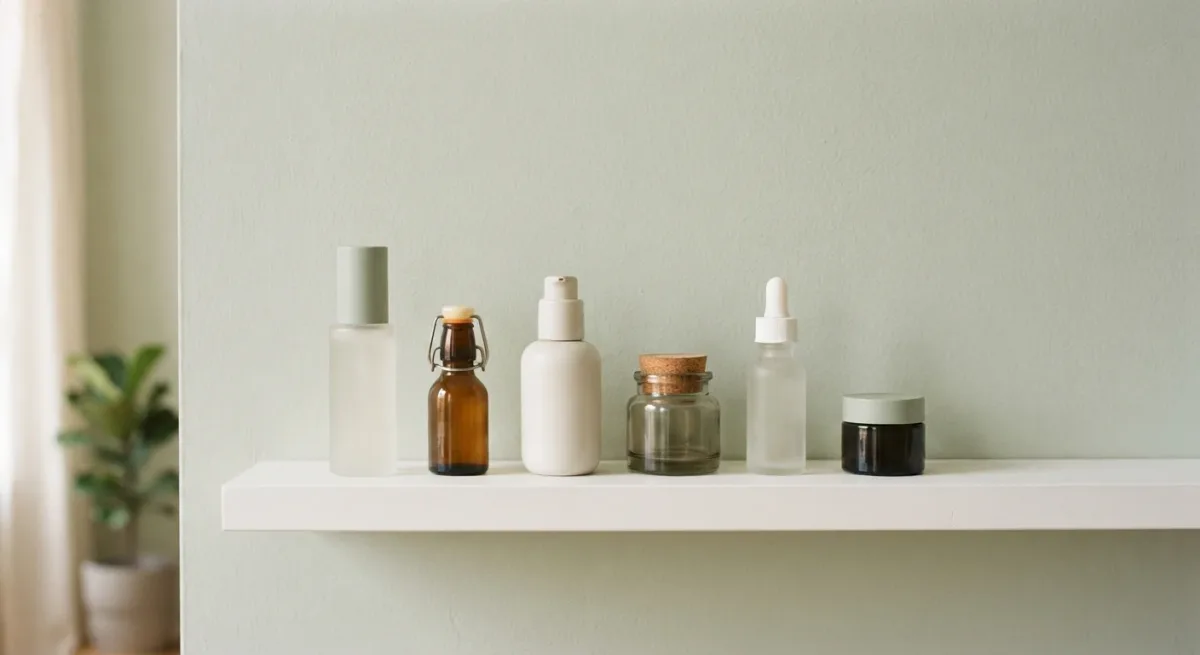
Skincare layers from thinnest to thickest texture: cleanser first, then water-light treatment serums, then moisturizer, and sunscreen last in the morning. The order matters for a mechanical reason — a product has to pass through every layer above it to reach the skin, and the American Academy of Dermatology's basic-routine guidance places sunscreen as the non-negotiable final morning step for exactly that reason. Get the sequence right and even three products work fully.
Beautyise publishes information, not dermatological advice; routines here are options with skin-type caveats, and persistent skin concerns belong with a dermatologist.
Why does thinnest-to-thickest work?
Because of penetration, not potency. A watery serum applied over a rich cream is mostly acting on the cream: occlusive moisturizer ingredients sit on the skin's surface and slow the passage of what follows, per dermatological guidance on product layering from the American Academy of Dermatology. Light formulas first lets each active reach the skin; heavier formulas after seal water in. The rule has one scheduled exception — retinoids, which dermatologists commonly direct onto dry, cleansed skin or mixed with moisturizer depending on tolerance, so a retinoid step's position follows the product's own usage instructions.
What does a minimal morning routine look like?
Four steps, five minutes, and every one earns its place.
- Cleanse. A gentle, water-rinseable cleanser, about 60 seconds of contact with lukewarm — not hot — water, per the AAD's cleansing guidance. If your skin is dry in the morning, water alone is a documented option. Pat, don't rub, until just-damp.
- Treat. One thin serum — vitamin C is the morning standard, an antioxidant that the AAD notes helps address visible effects of environmental exposure. Wait 30–60 seconds. Rushing this is why products pill.
- Moisturize. A pea-size amount, spread outward from the center of the face. This takes a full minute to sink in; give it.
- Sunscreen. SPF 30 or higher, broad spectrum, as the last step — the AAD calls daily sunscreen application to exposed skin the single most consistent step in any routine. About two finger-lengths of product for face and neck. It goes over everything, and makeup goes over it.
What changes at night?
Two things: no sunscreen, and repair-focused actives. Night is when retinoids, chemical exfoliants, and richer textures go on — the sequence keeps the same logic.
- Cleanse. If you wore sunscreen or makeup, the AAD's guidance supports double cleansing: an oil-based cleanser first to dissolve them, then your gentle cleanser. One cleanse is genuinely enough on bare-skin days.
- Treat. One active, not all of them. Retinoid or exfoliating acid — not both in one routine, a combination dermatologists flag as a common irritation source. New to an active? Two nights a week first, then build.
- Moisturize. The same one or a richer night formula; there is no rule that day and night moisturizer must differ.
Where do the popular extra steps go?
A toner, face mist, or essence is a liquid step — it belongs after cleansing and before serums. A face oil is the thickest layer there is: last at night, over moisturizer, never under it. Eye cream layers wherever its thickness sits on the scale — usually after serum, before or blended with moisturizer — and the AAD's position is plain: a well-formulated facial moisturizer handles the eye area acceptably, so eye cream is an option, not a requirement.
| Step | Morning | Evening |
|---|---|---|
| Cleanse | Gentle, or water alone | Gentle; double cleanse if wearing SPF/makeup |
| Liquid step | Toner/essence if used | Toner/essence if used |
| Serum | Antioxidant (e.g., vitamin C) | Retinoid OR exfoliating acid, not both |
| Eye cream | Optional | Optional |
| Moisturizer | Yes | Yes, can be richer |
| Final layer | Sunscreen SPF 30+, always | Face oil, optional |
What are the common layering mistakes?
Four account for most problems. Applying acid and retinoid in the same routine — irritation without added benefit; alternate nights instead. Skipping sunscreen because the moisturizer lists SPF — moisturizer quantities rarely reach the amount used in SPF testing, per dermatologists' standard caution about two-in-one products. Impatience between layers — 30 to 60 seconds each prevents pilling better than any technique fix. And adding everything at once: the AAD's guidance on new products is to introduce one at a time, so if skin reacts, the culprit is identifiable. Patch-test new actives on the inner forearm for a few days first — the same guidance appears throughout dermatology sources for a reason.
Do you need more than four steps?
No, and most dermatologists writing for consumers say the opposite: consistency beats complexity. A cleanser, one treatment serum, a moisturizer, and morning sunscreen is a complete routine by the AAD's definition. Everything beyond those four solves specific, named concerns — pigmentation, texture, acne — and each addition should answer a specific question about your skin rather than a shelf's worth of maybe. If a routine has stopped fitting through the day or the season changes your skin's needs, the honest move is swapping a step, not stacking another on top.
For more context, read Hormonal Acne in Women: Causes, Treatments, and Skincare.
For more context, read How to Bring Textiles Home Without a Customs Surprise.
For more context, read What FOIA's Nine Exemptions Actually Let an Agency Withhold.