
Topical vitamin C has meaningful trial support for evening out pigmentation and improving markers of sun-damaged skin: a widely cited review of clinical studies found formulations delivering 10 to 20 percent L-ascorbic acid at low pH improved skin tone irregularities and photoaging measures over roughly 12 weeks. Evidence for its other marketing claims remains thinner.
This article summarizes published research and regulatory context around topical vitamin C; it does not evaluate individual brands or offer treatment recommendations for skin conditions.
What is vitamin C doing in skin?
L-ascorbic acid, the active form of vitamin C, is a water-soluble antioxidant that skin cells need to synthesize collagen. Human skin holds substantial vitamin C concentrations when intake is adequate, and deficiency causes the poor wound healing seen in scurvy. The logic of serums is that topical application raises concentrations in the outer skin layers beyond what diet delivers, placing the antioxidant where ultraviolet exposure generates free radicals.
Penetration is the limiting step. Studies reviewed in dermatology journals found absorption is highest when L-ascorbic acid is formulated at a pH below about 3.5 and at concentrations near 20 percent, with little added benefit above that level, because saturation of skin transport occurs.
What do trials show for pigmentation?
Several small randomized trials have compared topical vitamin C with placebo or with hydroquinone, a long-established depigmenting agent. A frequently referenced split-face study published in 2004 found vitamin C produced modest but measurable lightening of melasma compared with its vehicle side, while another trial found it less effective than hydroquinone but better tolerated. Reviewers characterize the overall effect as moderate, gradual, and best documented for mottled tone rather than distinct dark spots.
Sample sizes are a recurring weakness: most studies enroll a few dozen participants over eight to sixteen weeks, and many are funded by the manufacturer whose formulation was tested.
Does vitamin C improve wrinkles or firmness?
The photoaging evidence is more consistent than dramatic. Trials using 3 to 10 percent ascorbic acid formulations reported improvements in fine wrinkling, skin roughness, and skin-tone measures over three to six months, and some measured increased collagen production in skin biopsies. A 2017 review in a dermatology journal concluded that topical ascorbic acid improved the appearance of photoaged skin across multiple small trials, while noting the field lacks large independent studies.
Derivatives complicate the picture. Many serums use stabilized relatives such as magnesium ascorbyl phosphate, ascorbyl glucoside, or tetrahexyldecyl ascorbate. These are far more stable on the shelf, but skin must convert them to the active form, and reviewers note that published efficacy data for derivatives at the concentrations used in retail products remain limited.
Does vitamin C help with acne or scarring?
Only weakly, on current evidence. A handful of small trials tested vitamin C as an adjunct for acne-related redness and post-blemish marks, reporting modest benefits, but reviews place it well behind benzoyl peroxide, retinoids, and azelaic acid in the acne literature. Its anti-inflammatory activity in laboratory studies has not translated into strong clinical acne outcomes, so positioning a serum as a blemish treatment runs ahead of the published record.
Why do serums turn orange, and does that matter?
L-ascorbic acid oxidizes on exposure to air, light, and heat, turning yellow then orange-brown as it degrades to dehydroascorbic acid. Analytical studies have found significant loss of active content in some retail products well before their stated expiration. Discoloration signals degradation; whether a lightly ambered serum retains meaningful activity depends on formulation and storage, but a dark orange product is generally considered past its useful life. Opaque, airless packaging and refrigeration slow the process. Laboratory analyses published in cosmetics-science journals have also tested products for pH drift and content variation over time, reinforcing a practical point from the research: freshness matters as much as the printed percentage, and a bottle opened many months earlier may deliver far less active vitamin C than its label promises.
Can vitamin C replace sunscreen?
No. Vitamin C is an antioxidant that may reduce some free-radical damage from ultraviolet exposure, and a small number of studies suggest combining it with vitamin E and sunscreen modestly improves protection markers, but it does not absorb or block ultraviolet radiation the way sunscreen filters do. Regulators treat sunscreen as a drug category precisely because protection claims require drug-level testing; vitamin C serums are marketed as cosmetics in the United States and make no such claim under FDA rules.
How do people typically use it, and what side effects occur?
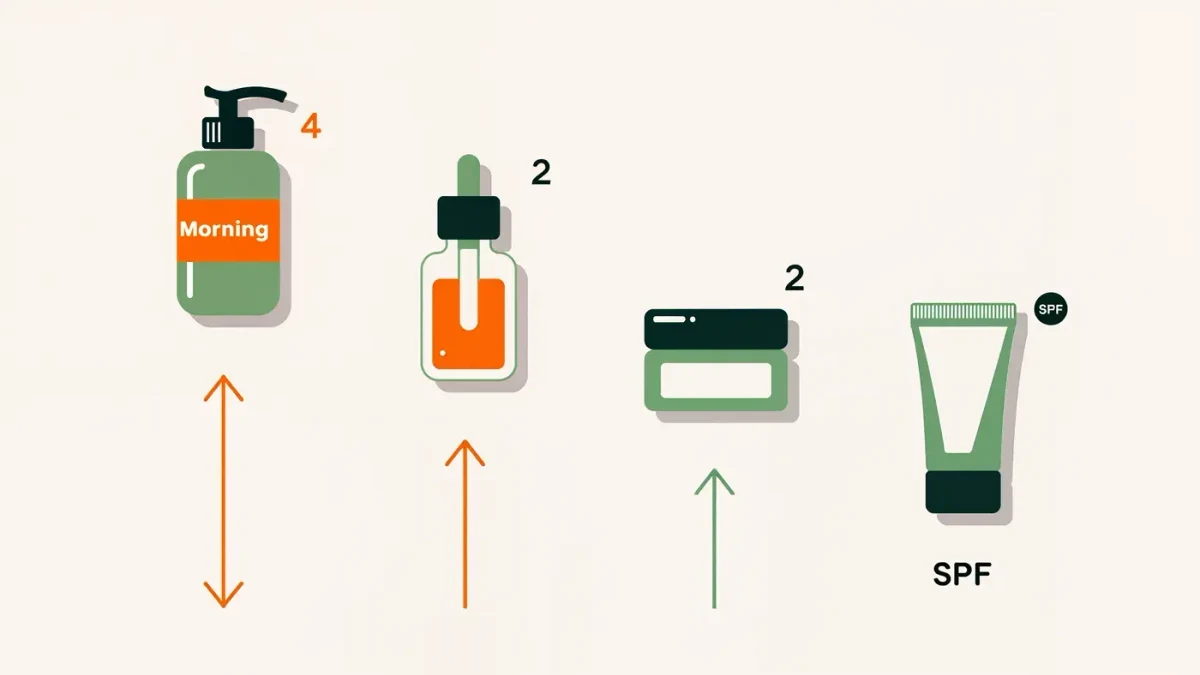
Trials generally applied vitamin C once daily, and dermatologists often suggest morning use under sunscreen, though timing is preference rather than evidence. Low-pH L-ascorbic acid can sting, especially on compromised skin or alongside exfoliating acids, and trials report mild transient irritation as the main adverse effect. Combining it with niacinamide, once rumored to be problematic, is not supported as harmful by modern research.
Is more expensive always better?
Not according to the published record. Trial results depend on the active form, its concentration, the formulation pH, and packaging that limits oxidation, none of which track reliably with retail price. Analytical studies testing off-the-shelf products have found wide variation in actual ascorbic acid content relative to labels, including in costly items. Because manufacturers rarely publish certificates of analysis, consumers have little independent way to verify content claims, an information gap that cosmetics regulation under the FDA does not close for non-drug products.
What does a realistic result look like?
Across trials, the honest summary is gradual, modest improvement in overall tone and surface quality measured over three months, rather than spot removal or wrinkle reversal. Photographs in the melasma literature show lightening visible mostly in side-by-side comparison, and several trials used specialized instruments to detect changes participants themselves might not notice. Expectations shaped by advertising, which often implies cosmetic-procedure results, sit well beyond what the studies document.
How does diet relate to all of this?
Systemic vitamin C matters for skin independently of serums. The nutrient supports collagen synthesis throughout the body, deficiency impairs wound healing, and observational research links higher fruit and vegetable intake with better skin appearance measures. Topical application is a separate question: it raises local concentrations regardless of diet, and no trial has tested whether serums add benefit in people with already adequate intake.
When should someone see a dermatologist?
Persistent, rapidly changing, or asymmetric dark patches warrant evaluation, as do any new pigmented lesions, because pigmentation changes can reflect medical conditions rather than cosmetic concerns. A clinician can also help when melasma or post-inflammatory pigmentation does not respond to over-the-counter care, and when stinging or redness from a product suggests a barrier problem or contact dermatitis rather than normal adjustment.
Bottom line
Topical vitamin C carries moderate trial support for pigmentation and visible photoaging changes, with the strongest data on properly formulated L-ascorbic acid at low pH. Stability, small study sizes, and manufacturer funding are the field's recurring caveats, and no serum, however expensive, substitutes for daily sun protection.