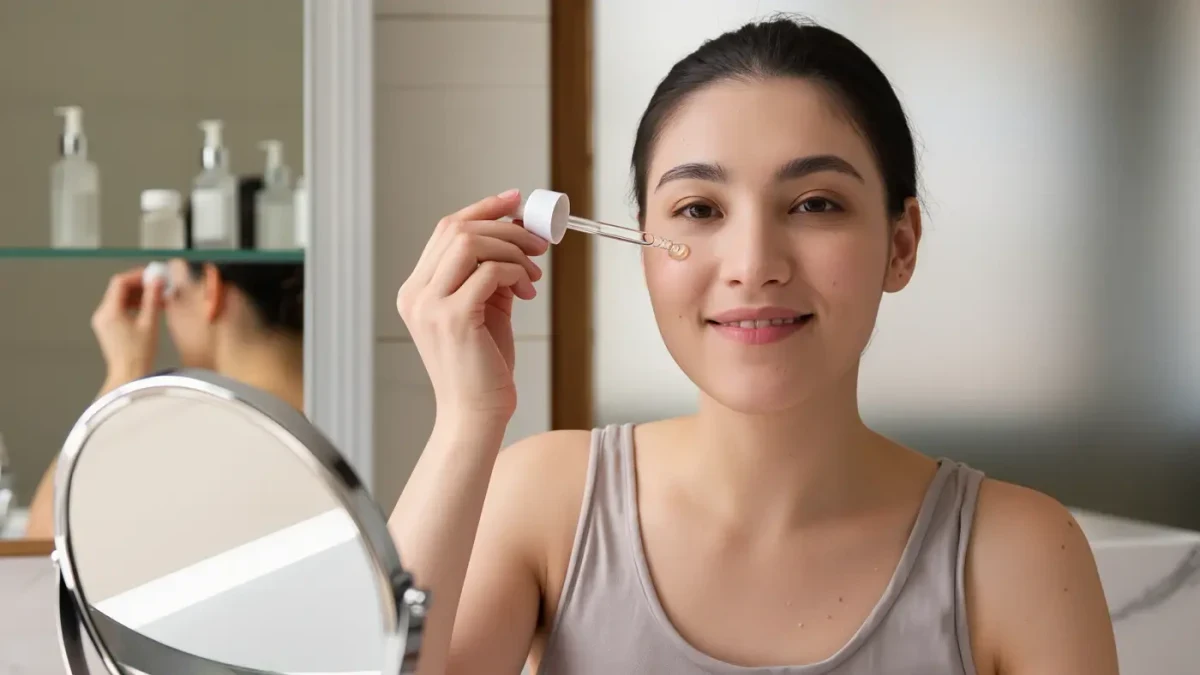

Niacinamide is one of the few cosmetic ingredients with decades of randomized trial data: studies dating to the 1990s found a 5 percent niacinamide moisturizer reduced fine lines, blotchiness, and sallowness over eight to twelve weeks, and trials at 2 to 4 percent showed measurable sebum and barrier improvements.
This article summarizes what published research reports about niacinamide in skin care; it does not diagnose skin conditions or evaluate specific retail products.
What is niacinamide?
Niacinamide, also called nicotinamide, is one of the two main forms of vitamin B3, an essential nutrient the body converts into NAD and NADP, coenzymes that power cellular energy metabolism and repair processes. Deficiency causes pellagra, historically marked by dermatitis among other symptoms, which is why niacinamide has a long medical history before its cosmetic career. In skin, topical application supports the production of barrier lipids called ceramides and appears to reduce inflammation signaling in laboratory studies.
The other B3 form, niacin, causes flushing when taken orally and is rarely used topically. Oral nicotinamide, notably, has been studied at prescription-adjacent doses for skin-cancer prevention in high-risk patients, a distinct use from cosmetic serums.
What does the research show for the skin barrier?
The barrier evidence is among the strongest for any cosmetic ingredient. Randomized trials found that 2 percent niacinamide increased ceramide and fatty acid levels in skin and reduced transepidermal water loss, a standard measure of barrier integrity. A 2000s study of 5 percent formulations reported reduced water loss and improved skin surface texture within weeks. These findings underpin why niacinamide appears in so many moisturizers marketed for sensitive or compromised skin.
Does it help with pigmentation and tone?
Trial data support a moderate effect. A split-face randomized study found 5 percent niacinamide lightened hyperpigmented spots and increased skin lightness over eight weeks, and a 2002 trial reported reductions in yellowing and blotchiness in photoaged skin. Researchers attribute the effect to niacinamide interfering with the transfer of melanosomes to skin surface cells rather than suppressing pigment production itself, which distinguishes it from agents that act upstream. Effects are gradual and smaller than those reported for prescription depigmenting agents.
What about oily skin and blemishes?
Trials of 2 to 4 percent niacinamide found statistically significant reductions in sebum excretion rates after two to four months in people with oily skin. In acne research, a 4 percent niacinamide gel performed comparably to a 1 percent clindamycin gel in one controlled trial, though the comparison involved a small sample and industry sponsorship. Reviews characterize niacinamide as a supportive ingredient for mild blemishes rather than a standalone treatment for moderate or severe acne.
How much niacinamide is enough?
Most positive trials used 2 to 5 percent. Concentrations of 10 percent and above, now common in retail serums, generally lack equivalent published head-to-head evidence and appear mainly in industry studies; higher strengths have not been shown to outperform 5 percent and may increase flushing or stinging in sensitive users. Because niacinamide is water-soluble and inexpensive to formulate, the gap between label percentage and demonstrated benefit is a recurring point in cosmetic-science commentary.
Does the vitamin C and niacinamide conflict myth hold up?
No. The idea comes from a 1960s chemistry observation that the two compounds could convert into each other in uncontrolled conditions, typically at high temperatures over long storage. Modern formulations sit at pH levels where the reaction is negligible, and studies combining the two have reported complementary benefits without added irritation. Product labeling conflicts, where they exist, reflect marketing caution rather than documented risk.
How well is it tolerated?
Across trials, niacinamide shows an unusually favorable tolerability profile: irritation rates close to placebo, no photosensitivity signal, and safe use alongside retinoids, acids, and antioxidants. Rare reports describe flushing or contact reactions, and cosmetic-science reviewers note that impurities or formulation additives, rather than niacinamide itself, are frequent suspects when products cause stinging.
When should someone see a dermatologist?
A clinician should evaluate persistent or worsening rashes, suspected contact allergy to any product, pigmentation that changes quickly or unevenly, and acne that is moderate to severe or scarring. Niacinamide can support a routine, but spreading redness, burns, or reactive skin patterns such as rosacea flares need assessment rather than more products.
Bottom line
Niacinamide carries some of the better evidence in cosmetics: randomized trials at 2 to 5 percent support barrier improvement, modest tone and pigmentation benefits, and reduced oiliness, all with strong tolerability. Claims beyond those outcomes, and concentration escalation above 5 percent, currently run ahead of the published data.