The skin barrier is skin's outermost layer, and moisturizers support it through three measurable mechanisms: studies of petrolatum found it reduced transepidermal water loss by roughly 98 percent, humectants such as glycerin measurably raise surface hydration, and emollients smooth texture in instrumented trials, per dermatology review literature.
This article explains how the skin barrier works and what research says about moisturizer ingredients; it does not diagnose skin conditions, and persistent barrier problems belong with a clinician.
What exactly is the skin barrier?
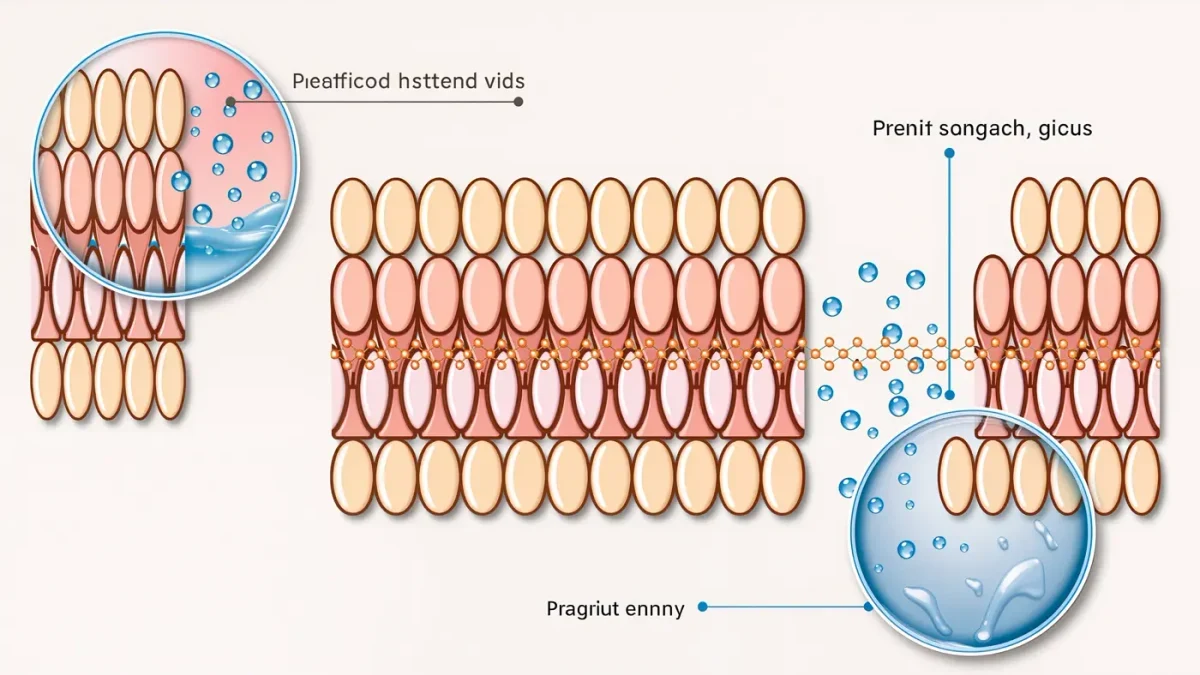
Dermatologists describe the outermost layer, the stratum corneum, with a bricks-and-mortar model: flattened, dead skin cells are the bricks, and a lipid mortar of ceramides, cholesterol, and free fatty acids holds them together. This thin assembly, roughly 15 to 20 cell layers thick in most areas, controls water loss, blocks most environmental chemicals and particles, and hosts the acid mantle, a mildly acidic film that discourages some bacteria. Barrier quality varies by body site, age, and genetics, which is why eyelids sting from products forearms tolerate.
What damages it?
Research documents several familiar culprits. Harsh surfactants strip barrier lipids; studies of soap washing found measurable increases in water loss and surface pH after repeated exposure. Over-exfoliation, hot water, low humidity, and wind each raise water loss in instrumental studies, and adult barrier function declines with age as lipid synthesis slows. Certain actives, including retinoids and acids, thin the barrier temporarily by design, which is why their trials pair them with moisturizers.
What is the difference between humectants, emollients, and occlusives?
- Humectants, including glycerin, hyaluronic acid, urea, and panthenol, attract and hold water in the outer layers. Glycerin is the most studied; trials found it outperformed many fashionable ingredients at raising surface hydration.
- Emollients, including squalane, shea butter, and most lightweight oils, fill the spaces between skin cells, smoothing texture and improving flexibility in measured outcomes.
- Occlusives, including petrolatum, mineral oil, and dimethicone, form a film that slows evaporation. Petrolatum leads the category in comparative studies, which is why it anchors formulations for compromised skin.
Well-built moisturizers combine all three. Instrumental studies comparing formulations found mixed-class products outperform single-mechanism ones on hydration, water loss, and roughness measures.
Do ceramide moisturizers work better?
The ceramide evidence is real but specific. Skin biopsies from people with eczema show reduced ceramide levels, and randomized trials found ceramide-containing moisturizers improved hydration and reduced water loss in compromised skin, with some studies reporting added benefit from formulations matching skin's native lipid ratio of roughly 3:1:1 ceramides to cholesterol to fatty acids. Whether retail products replicate those ratios is a separate question; the ingredient list alone does not demonstrate it, a gap cosmetic-science reviewers flag.
Does pH matter in cleansers and moisturizers?
More than most labeling suggests. Skin recovers its acidic mantle within hours after disruption, but studies found repeated use of alkaline soap delays recovery and raises water loss, while synthetic-detergent cleansers at pH near 5 disturb the barrier measurably less. Reviews of wound and dermatitis care extend the point: maintaining acidity supports both lipid organization and microbial balance.
How long does repair take?
Faster than marketing implies and slower than a single night. Instrumental studies of experimentally disrupted skin show lipid synthesis and normalization of water loss over roughly one to two weeks with regular moisturizer use, while surface pH recovers within days. Creams claiming overnight barrier repair describe surface feel, not the measured lipid rebuilding timelines in the literature.
Is more expensive or more natural better?
Neither claim has much instrumental support. Comparative testing found inexpensive petrolatum- and glycerin-based formulas matching or beating premium products on hydration and water-loss measures, and natural does not map to gentle, since botanical extracts are frequent causes of contact allergy in dermatology case series. Fragrance, the most common cosmetic allergen, is the ingredient reviews most consistently suggest avoiding in compromised skin, regardless of a product's price or positioning.
When should someone see a dermatologist?
Professional evaluation makes sense for dryness and irritation that persist despite two weeks of consistent moisturizing, rashes that itch, burn, or spread, reactions suspected from a specific product, and conditions such as eczema, rosacea, or psoriasis, where barrier support is adjunctive rather than sufficient. Sudden widespread dryness can also reflect thyroid changes or medication effects that need medical assessment.
Bottom line
The barrier model explains most moisturizer advice: protect lipids, keep cleansing mild and near skin's natural pH, and combine humectants with occlusives. Petrolatum and glycerin remain the best-measured ingredients, ceramide formulas have targeted evidence, and repair runs on a one-to-two-week clock, not an overnight promise.