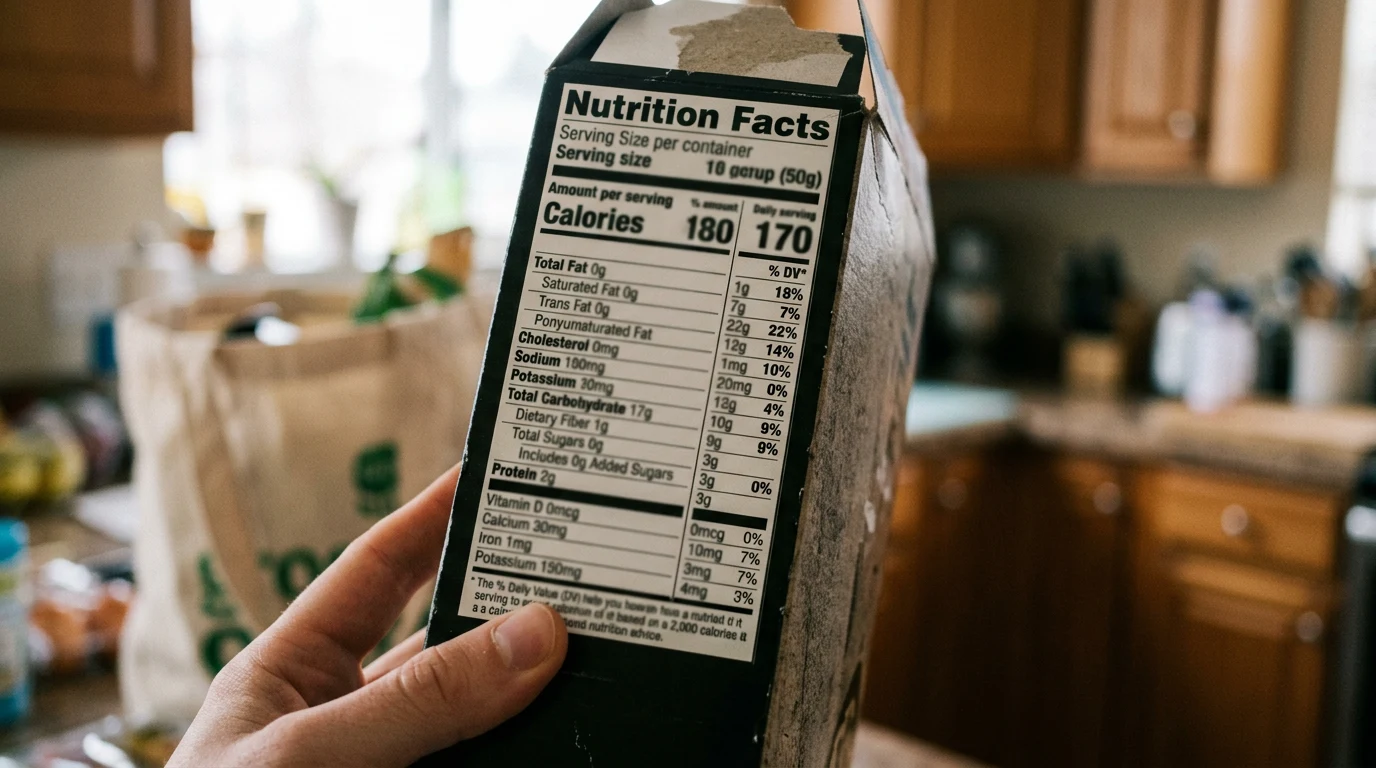

Federal guidance caps added sugars at less than 10 percent of daily calories — about 50 grams, or 12 teaspoons, on a 2,000-calorie diet — per the Dietary Guidelines for Americans, while the American Heart Association suggests a stricter ceiling of roughly 25 grams daily for women and 36 grams for men. The average American consumes far more: survey analyses put typical intake at roughly 13 to 17 percent of calories, and a single 20-ounce soft drink can deliver the entire daily federal allowance.
The numbers below describe what government and professional bodies have published, not a prescription; individual targets differ with diabetes, lipid disorders, and other conditions, and a physician or registered dietitian can set personal goals.
What is added sugar, and how is it different from natural sugar?
The Dietary Guidelines for Americans define added sugars as sugars introduced during processing or preparation — table sugar, syrups, honey, and sugars concentrated from fruit or dairy — as distinct from naturally occurring sugars in intact fruit and plain milk. The FDA's 2016 labeling rule operationalized a similar definition, requiring an "Added Sugars" line on the Nutrition Facts panel since January 2020, with a Daily Value of 50 grams. The distinction exists because the food matrix changes the package: sugars in whole fruit arrive with fiber, water, and micronutrients and lower energy density, which is why federal guidance encourages whole fruit without restriction while capping the added form.
What do the major guidelines say?
- Dietary Guidelines for Americans: less than 10 percent of daily calories from added sugars beginning at age 2, with infants under 2 avoiding added sugars entirely
- World Health Organization: free sugars under 10 percent of energy, with a conditional suggestion below 5 percent for extra benefit, per the organization's 2015 guideline
- American Heart Association: about 25 grams daily for women and 36 grams for men, per its 2009 scientific statement, still cited in current materials
- FDA Nutrition Facts label: Daily Value of 50 grams, with 20 percent of the Daily Value per serving considered high and 5 percent low
The WHO's "free sugars" term is slightly broader than "added sugars" — it includes sugars naturally present in honey, syrups, and fruit juice — which is why the WHO also suggested limiting juice.
Why the limits? What does the evidence connect added sugar to?
The 2020 Dietary Guidelines Advisory Committee identified added sugars as a public-health concern: dietary patterns high in added sugars are associated in cohort research with higher risks of type 2 diabetes, obesity, and cardiovascular disease. A well-known 2014 JAMA Internal Medicine analysis of NHANES data found that adults whose added-sugar intake exceeded 25 percent of calories had roughly twice the cardiovascular mortality of those under 10 percent — an observational finding, adjusted for many but not all confounders. The strongest causal evidence concerns sugary drinks: an NIH-funded 2019 randomized trial found that replacing them with artificially sweetened substitutes reduced children's weight gain over a year.
Where does added sugar hide?
The largest sources are not the sugar bowl but processed foods:
- Sugar-sweetened beverages — sodas, sweet teas, sports drinks, sweetened coffee drinks — the single largest source, at roughly 25 to 30 percent of added-sugar intake per NHANES analyses
- Desserts, sweet snacks, sweetened yogurts, and breakfast cereals
- Sauces and dressings, including ketchup, pasta sauce, and salad dressing
- Breads, granola bars, and flavored oatmeal
- "Health-positioned" items: protein bars and smoothies can carry 15 to 25 grams per serving
Labels now make this visible: a product listing 15 grams of added sugar per serving contains 30 percent of the 50-gram Daily Value.
What are the names for added sugar on ingredient lists?
The FDA recognizes over 60 names, including sucrose, high-fructose corn syrup, dextrose, maltose, rice syrup, agave nectar, cane juice, molasses, honey, and fruit juice concentrate. Because ingredient lists are ordered by weight, a product can place several sweeteners in mid-list positions and still total substantial sugar — a pattern labeling researchers have called "sugar stacking."
Are sugar substitutes an acceptable swap?
Partly. The FDA considers approved high-intensity sweeteners safe at permitted levels, and federal guidance suggests unsweetened beverages as replacements for sugary ones. The World Health Organization's 2023 guideline, however, issued a conditional recommendation against using nonsugar sweeteners for weight control, citing low-certainty evidence that long-term benefits were not demonstrated.
Why the under-2 rule for children?
National survey analyses show toddlers already exceed the 10-percent cap. The under-2 recommendation reflects that early years establish taste preferences, that infants' high energy needs leave little room for empty calories, and that early exposure is associated with higher intake later in childhood.
When to see a doctor or registered dietitian
Professional input is appropriate when blood glucose or triglyceride results are rising, since individualized targets are stricter than population guidance; when sugary-drink habits feel entrenched; when a child's intake consistently exceeds guidance; and in pregnancy, where gestational diabetes management requires individualized carbohydrate planning. Sudden extreme thirst, unintentional weight loss, or frequent urination warrant prompt medical evaluation regardless of diet.
The bottom line on added sugar guidance
The numbers to remember are three ceilings: 10 percent of calories under federal guidance, a 5-percent stretch goal per the World Health Organization, and 25 to 36 grams daily per the American Heart Association. Average intake exceeds all three, and sugary drinks are the largest single contributor. The Added Sugars line on the Nutrition Facts panel, in place since 2020, is the practical tool for closing the gap.