Falls among older adults are common, costly, and largely preventable: the CDC reports that about one in four adults aged 65 and older falls each year, making falls the leading cause of both injury and injury-related death in that age group, with emergency departments recording roughly 3 million fall-related visits annually among older Americans. Yet the strongest evidence in fall prevention is not a gadget or a drug but structured exercise: programs that combine strength and balance training reduced falls by roughly 23 percent across trials, per a Cochrane review of randomized studies summarized by the National Institutes of Health in 2023.
This article reviews who is at risk, which interventions have trial support, how homes can be made safer, and what a fall means medically.
Why do falls matter so much after 65?
The consequences scale sharply with age. CDC surveillance shows that falls are the leading cause of hip fractures among older adults, and more than 95 percent of hip fractures are caused by falling, most often by falling sideways. Hip fracture carries a sobering one-year profile: studies cited by the National Institute on Aging associate it with substantial loss of independence, and mortality in the first year after the injury is markedly elevated. Beyond fractures, falls produce head injuries, and older brains are more vulnerable to bleeding after even a seemingly minor bump.
The psychological toll compounds the physical one. A fall that goes unwitnessed can trigger a fear of falling again, and that fear leads to activity restriction, which weakens muscles further and paradoxically raises future fall risk, a loop CDC describes in its STEADI program materials. Perhaps the most quoted statistic in this field: fewer than half of older adults who fall tell a medical professional, per CDC figures, which means the preventable cycle often stays invisible.
Who is at highest risk?
Risk stacks. The CDC's STEADI materials list the main contributors: muscle weakness, difficulties with balance or gait, vision loss, foot problems, certain medications, hazards at home, vitamin D deficiency, and chronic conditions including diabetes, arthritis, Parkinson's disease, and neuropathy. People who have fallen once are roughly twice as likely to fall again, per CDC data.
Medications deserve specific attention. Sedatives, sleep aids, some antidepressants, blood pressure drugs that cause postural drops, and any combination of four or more prescriptions raise fall risk, and the STEADI framework treats medication review as a core screening step. Three simple questions, developed for the STEADI program and adapted from prior screening tools, identify most high-risk people: whether they have fallen in the past year, whether they feel unsteady standing or walking, and whether they worry about falling.
Which interventions have the strongest evidence?
The 2023 Cochrane evidence synthesis, encompassing more than 100 randomized trials, ranked interventions by effect size, and its conclusions, summarized in NIH and CDC materials, remain the field's consensus as of 2024:
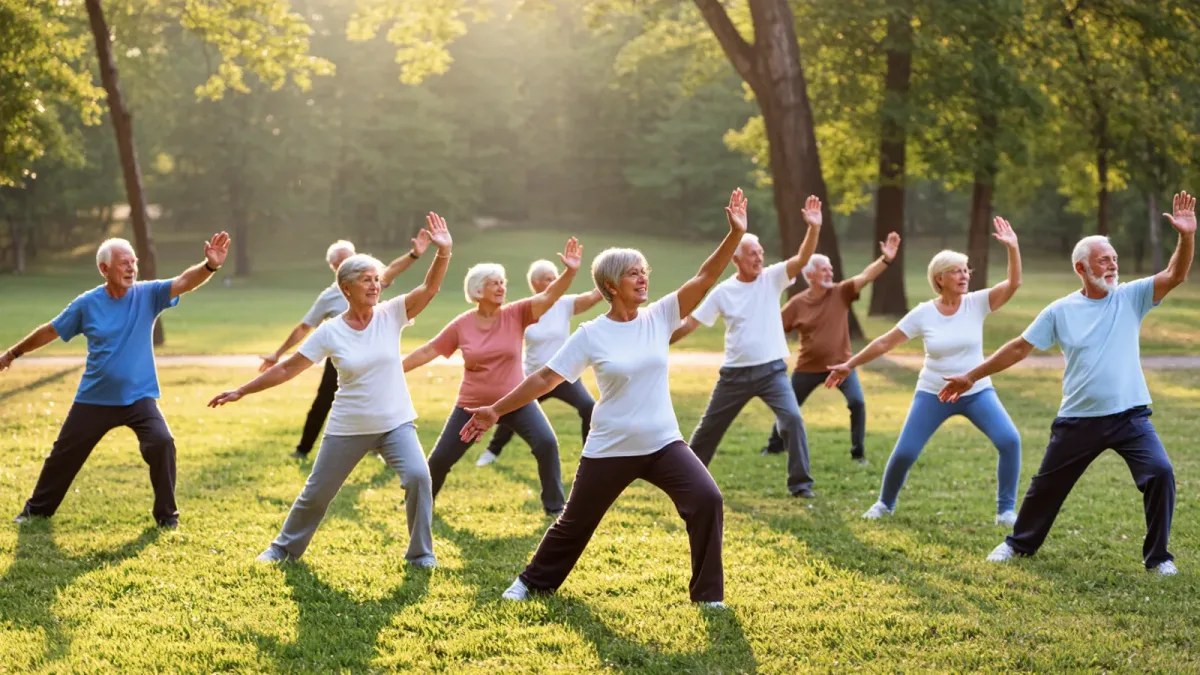
- Exercise combining strength and balance training, performed at least three hours weekly, reduced falls by roughly 23 percent; tai chi programs performed comparably in multiple trials.
- Home hazard assessment and modification, delivered by an occupational therapist, cut falls by about 26 percent, with the largest benefit among people at high risk.
- Medication review and deprescribing of fall-risk drugs reduced falls, particularly when sedatives were tapered.
- Vitamin D supplementation reduced falls only in people with low vitamin D levels; universal supplementation was not supported.
- Footwear review, cataract surgery, and single-vision distance lenses for outdoor use in frequent fallers showed benefits in specific trials.
Soft interventions fared worse. Education alone, hip protectors in community settings, and general advice without follow-up showed little measurable effect in the Cochrane analysis, a finding that underscores the field's main lesson: prevention is behavioral and environmental, not informational.
What exercises are recommended?
The most-studied formats are structured programs, and the National Institute on Aging's exercise materials, updated as of 2023, emphasize four elements: strength work such as chair stands and resistance bands, balance practice such as standing on one foot while holding a counter, flexibility work, and endurance activity such as walking. Community tai chi classes, particularly the simplified forms used in the trials cited by CDC, are a practical entry point because they require no equipment and scale intensity gently. People who have recently fallen or have significant balance impairment are generally advised to have an assessment before starting, so the program can be matched to ability and performed safely.
How should a home be made safer?
Environmental changes are inexpensive and effective, and CDC and the National Institute on Aging publish overlapping checklists. High-yield items include removing loose rugs or securing them with non-slip backing, clearing clutter and cords from walkways, adding grab bars in bathrooms and a rail on both sides of stairs, improving lighting on staircases and hallways, keeping frequently used items between waist and shoulder height to avoid climbing, wearing supportive non-slip footwear indoors, and mounting a night light along the path from bed to bathroom, since the majority of falls occur during ordinary activity and many happen at night.
Do bones themselves need attention?
Fall prevention and bone health are two halves of the fracture equation, and the second half is often neglected until an injury forces it. The National Institute on Aging notes that bone loss accelerates in the years after menopause and continues with age, so an older adult who falls may break a hip on a fall another person would shrug off. A bone density scan, DXA, measures that reserve and is the basis for osteoporosis treatment decisions; the National Institute of Arthritis and Musculoskeletal and Skin Diseases describes screening as a discussion with a clinician for all women 65 and older and for postmenopausal women with additional risk factors. Adequate calcium intake, vitamin D sufficiency, weight-bearing exercise, and, where a clinician judges the fracture risk high enough, prescription bone medications all reduce the chance that a fall becomes a fracture. People taking medications that weaken bones long term, such as certain steroids, are among the groups most often advised to address bone density proactively rather than waiting for a first break.
When to see a doctor
When to see a doctor
Any fall that causes a head strike, particularly for a person taking blood thinners, warrants same-day medical evaluation because of the risk of delayed brain bleeding. A fall with loss of consciousness, a suspected fracture, inability to bear weight, or new confusion also requires urgent care. Falls without injury should still be reported to a clinician, since they are treated as a medical symptom: the workup typically covers vision, foot sensation, blood pressure lying and standing, medication review, gait and balance testing, and vitamin D status. Dizziness, lightheadedness on standing, or near-falls deserve the same attention, and recurrent falls despite exercise and home changes are a reason to ask for a referral to a falls clinic or physical therapist.