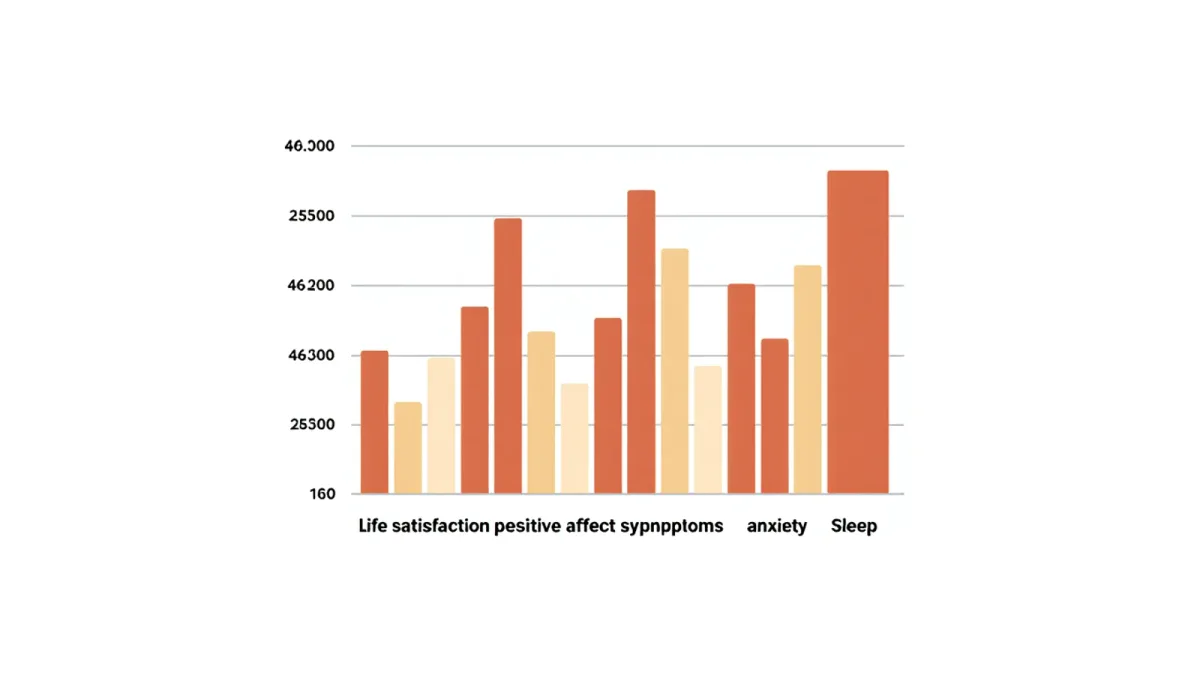

Gratitude practices help, but modestly: a meta-analysis of 38 randomized studies found gratitude interventions produced small but significant wellbeing gains, roughly a quarter of a standard deviation. The field began with a 2003 study in which students who wrote weekly about gratitude felt better about their lives.
This article explains what the research supports and what remains unproven.
How is gratitude studied?
Most evidence comes from two designs. Randomized trials assign participants to write gratitude lists or letters for one to several weeks and compare them with control groups who write about neutral events or daily activities. Cross-sectional and longitudinal surveys measure whether grateful dispositions correlate with wellbeing over time. Laboratory studies of gratitude itself, often using gift-giving paradigms or recall tasks, examine immediate effects on mood and prosocial behavior. Effect sizes in the trial literature are typically small, which reviewers attribute partly to brief interventions and short follow-ups.
Which practices have trial support?
- Gratitude journaling. Listing three to five things one is grateful for, often described in the literature as the counting blessings task, is the most studied format. A 2019 meta-analysis in Basic and Applied Social Psychology found small positive effects on wellbeing, larger when journaling lasted several weeks.
- Gratitude letters. A frequently cited 2017 randomized trial by Joel Wong and colleagues at Indiana University compared gratitude letter writing with psychotherapy in adults with anxiety and depression, finding that letter writing combined with therapy improved mental health more than therapy alone, with benefits persisting at follow-up.
- Gratitude visits. Martin Seligman's 2005 exercise, delivering a letter of thanks in person to someone never properly thanked, produced the largest short-term happiness boost among five positive psychology exercises tested, but it has been replicated rarely.
What are the proposed mechanisms?
Researchers have proposed several pathways, and the evidence for each varies. Gratitude may work by redirecting attention toward positive experiences, counteracting a built-in negativity bias documented in attention research. It may improve relationships, since expressing thanks strengthens bonds, and relationship quality is among the strongest predictors of wellbeing. Some studies report better sleep after gratitude journaling, including a 2009 study in the Journal of Psychosomatic Research in which adults with neuromuscular disorders who journaled nightly reported longer and more restful sleep, though such studies rely on self-report.
Where do the claims outrun the evidence?
The popular literature often promises more than trials deliver. Findings on gratitude and physical health, including inflammation, blood pressure, and heart rate variability, are preliminary and inconsistent, based largely on small samples. A 2022 study of gratitude journaling during the COVID-19 pandemic found no measurable benefit over control activities in some student samples, and reviewers note publication bias: studies finding no effect are less likely to appear in print. Effects also fade; the Wong trial found benefits declined toward baseline after three to six months without continued practice.
Who benefits most and who should be cautious?
Moderation appears to matter. A frequently cited 2018 study in the Journal of Positive Psychology found that journaling weekly produced better outcomes than journaling three times per week, suggesting that forced frequency can make the practice feel obligatory. Gratitude exercises can also misfire for people in acute grief or crisis, where prompting thankfulness may feel invalidating; clinical writers on positive psychology have noted this risk, though systematic data are thin. People with clinical depression should treat gratitude exercises as a possible supplement to treatment, not a substitute.
How long does it take to see effects?
Most trials ran for two to six weeks, and measured benefits appeared within that window. The durability question is less settled: the few longer follow-ups show declining effects unless the practice continues. Researchers characterize gratitude journaling as a low-cost, low-risk activity with small average benefits, closer in scale to regular exercise for mood than to treatment for depression.
When to see a doctor or clinician
Gratitude practices are not treatments for mental illness. Persistent sadness lasting more than two weeks, loss of interest in daily activities, changes in sleep or appetite, or thoughts of self-harm warrant evaluation by a physician or mental health professional. Evidence-based treatments for depression and anxiety, including cognitive behavioral therapy and medication, have far stronger support than any positive psychology exercise, and clinicians can advise whether gratitude work is appropriate alongside them.