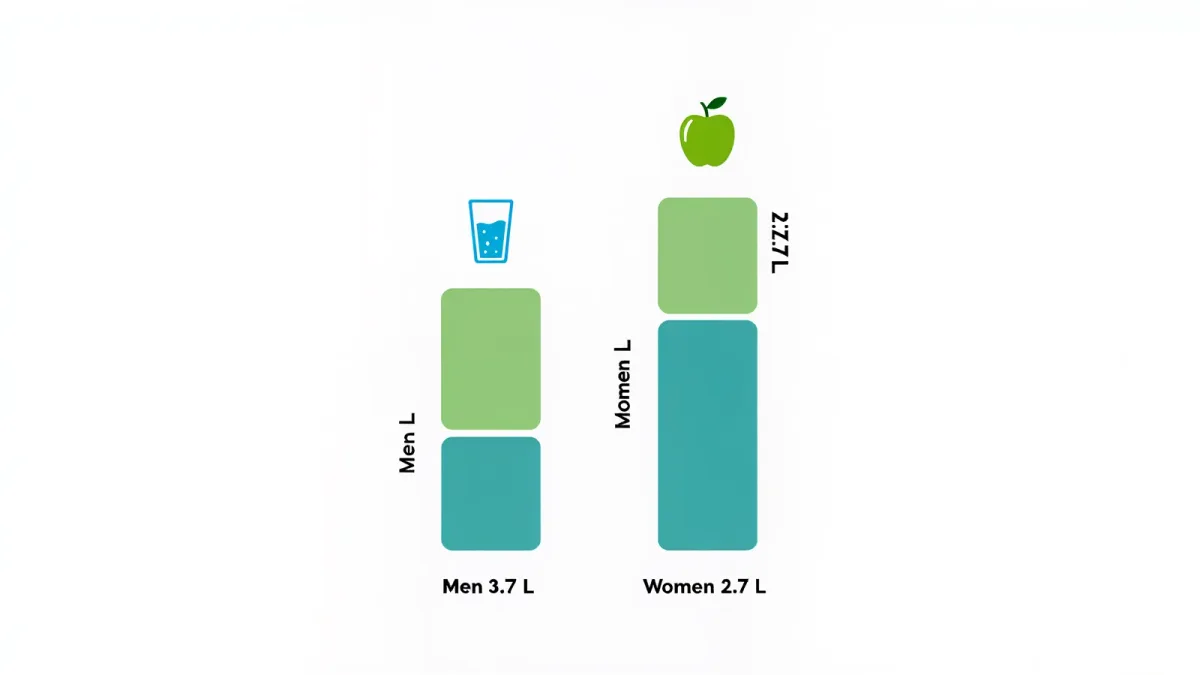
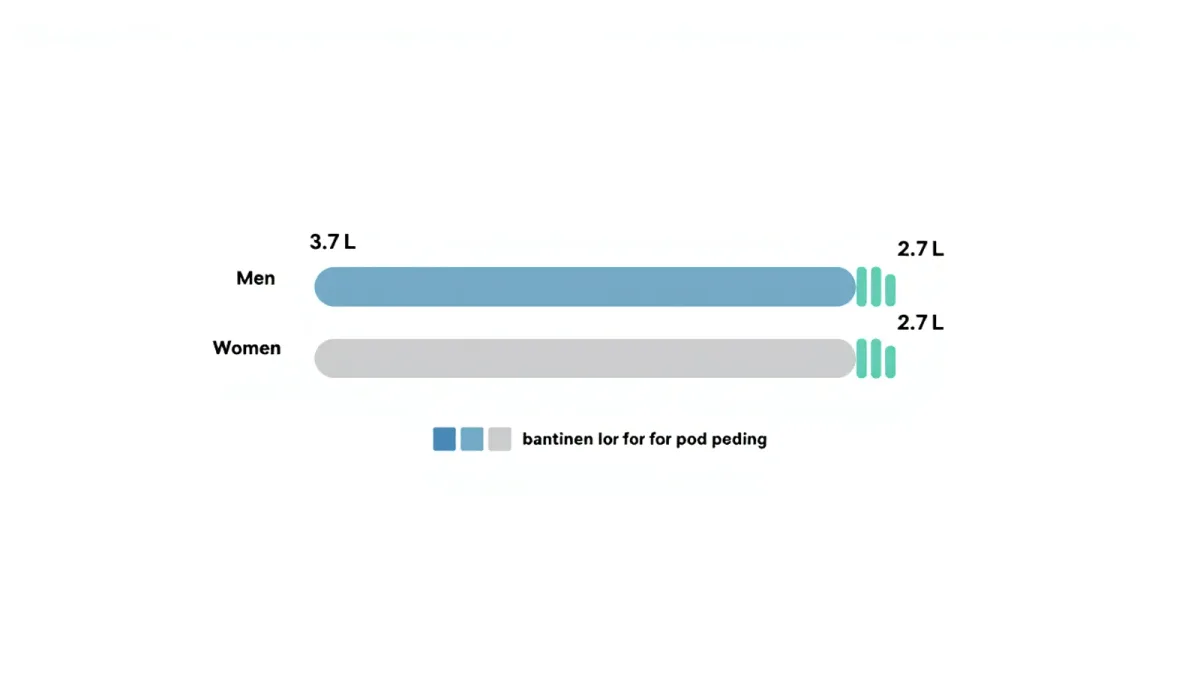
Most healthy adults need roughly 2.7 to 3.7 liters of total water per day from drinks and food combined, per the U.S. National Academies' adequate intake figures set in 2004: 3.7 liters for men and 2.7 liters for women. About 20 percent typically comes from food, so drink needs are smaller than the totals suggest.
This article explains where those numbers come from and how individual needs vary.
Where does the eight-glasses rule come from?
The advice to drink eight 8-ounce glasses a day, about 1.9 liters, appears in no major clinical guideline, and its origin is unclear. A widely cited 2002 letter in the American Journal of Physiology by kidney specialist Heinz Valtin searched for evidence supporting the rule and found none, concluding that the recommendation likely persisted through repetition rather than research. The National Academies' adequate intake figures replaced any fixed glass count years earlier.
What do official bodies actually recommend?
The National Academies' 2004 report set adequate intake levels of 3.7 liters per day for adult men and 2.7 liters per day for adult women, counting water from beverages and food together. These are population averages for healthy people in temperate climates, not personal targets. The CDC's water guidance emphasizes drinking when thirsty and choosing water over sugar-sweetened drinks, without prescribing a universal amount. Per the U.S. Dietary Guidelines, plain water can contribute meaningfully to daily fluid intake at any age.
Does water from food really count?
It does. Fruits and vegetables such as watermelon, cucumber, and oranges are 85 to 95 percent water by weight, and soups, milk, and cooked grains add further fluid. The National Academies estimated that about 20 percent of daily water intake in the American diet comes from food, which is why the drinkable portion of the 2.7-to-3.7-liter range is closer to roughly 2 to 3 liters for most adults.
What raises a person's water needs?
Several conditions push fluid requirements well above the baseline.
- Heat and humidity. Sweat losses during exercise in warm conditions can reach one to two liters per hour in some athletes, per sports nutrition reviews, and losses continue at rest in hot weather.
- Exercise. The American College of Sports Medicine has long advised athletes to weigh themselves before and after training as a practical check on fluid loss.
- Pregnancy and breastfeeding. The National Academies raised the adequate intake to 3.0 liters per day during pregnancy and 3.8 liters per day while breastfeeding.
- Illness. Fever, vomiting, and diarrhea increase losses. Oral rehydration solutions, not plain water, are the standard recommendation for significant diarrhea, per WHO guidance.
- Altitude. Increased breathing rate and urination at elevations above roughly 2,500 meters raise losses.
Can someone drink too much water?
Yes, though it is uncommon. Water intoxication, or hyponatremia, occurs when intake outpaces the kidneys' maximum excretion rate of roughly 0.8 to 1.0 liters per hour and dilutes blood sodium. A 2005 study in the New England Journal of Medicine found that about 13 percent of runners in the 2002 Boston Marathon developed hyponatremia, most often from drinking excessive amounts during the race. Symptoms range from nausea and headache to confusion and seizures in severe cases. Endurance athletes and people with certain psychiatric conditions face the highest risk.
Is thirst a reliable guide?
For most healthy adults, thirst tracks fluid needs well enough that drinking to thirst maintains normal hydration, an approach endorsed in position statements from the American College of Sports Medicine. Thirst does become blunted with age, and a 2010 review in the Journal of the American Geriatrics Society noted that older adults maintain hydration less precisely, which is part of why clinicians watch fluid intake in that population more closely.
What does dehydration look like?
Early signs include darker urine, infrequent urination, headache, and reduced concentration. Research on mild dehydration, including a 2012 study in The Journal of Nutrition, found that even a fluid loss of about 1.4 percent of body weight was associated with measurable drops in mood and concentration in young women. Urine color charts, widely used in clinical and athletic settings, give a simple proxy: pale yellow generally indicates adequate hydration, while dark yellow suggests a need for more fluid.
Do coffee and tea dehydrate people?
The common claim that caffeinated drinks drain the body of fluid does not survive regular use. A frequently cited 2000 review by researcher Lawrence Armstrong concluded that caffeine doses typical of normal coffee and tea consumption produced no meaningful net fluid loss in habitual consumers, so these beverages count toward daily intake. A single strong dose taken by someone who rarely consumes caffeine can have a short-term diuretic effect.
When to see a doctor
Symptoms of significant dehydration, including dizziness on standing, rapid heartbeat, confusion, little or no urination over eight hours, or inability to keep fluids down, warrant prompt medical attention. People with heart failure, kidney disease, or conditions requiring fluid restriction should not raise their intake without clinical guidance, since excess fluid can be dangerous in those conditions. Persistent excessive thirst and frequent urination can be signs of diabetes and should be evaluated by a clinician.