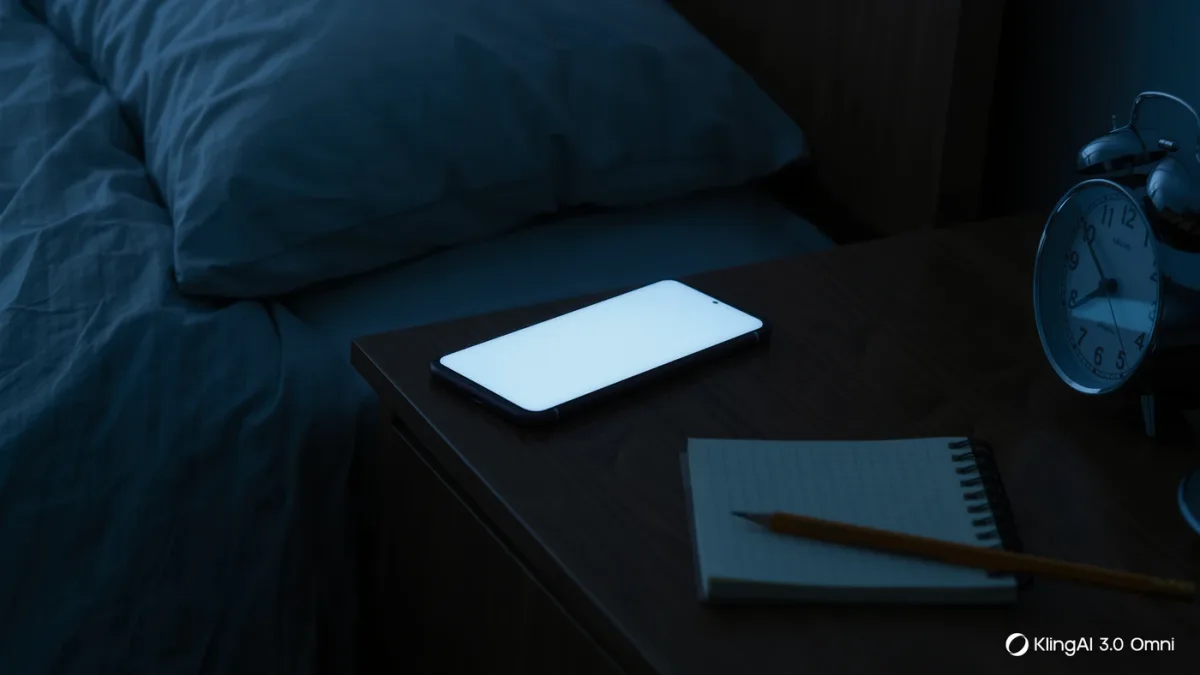
Screen use in bed is consistently linked with worse sleep: a 2024 Norwegian study of more than 45,000 young adults found each hour of screen use in bed associated with roughly 59 percent higher insomnia symptom risk and about 24 minutes less sleep per night. Sleep experts advise stopping 30 to 60 minutes before bed.
This article explains what the research supports and what it does not.
How do screens interfere with sleep?
Researchers point to two mechanisms, and the evidence for them differs in strength.
The first is light. Light in the blue portion of the spectrum suppresses melatonin and shifts the circadian clock, and controlled laboratory studies, including a frequently cited 2013 experiment at Rensselaer Polytechnic Institute, found that two hours of evening tablet use with backlit screens suppressed melatonin in some participants. The second is engagement: interactive content delays bedtime because scrolling and notifications sustain alertness, an effect researchers call bedtime procrastination. A 2020 review in Sleep Medicine Reviews concluded that the content and timing of use appear to matter as much as the light itself, which explains why passive reading on a lit e-reader shows weaker effects than interactive scrolling in some studies.
What did the large Norwegian study find?
The 2024 study by researchers at the Norwegian Institute of Public Health used self-reported questionnaires in 45,202 university students and found a dose-response relationship between in-bed screen time and insomnia symptoms after adjusting for sleep timing and other factors. Notably, screen type made little difference: the researchers concluded that time spent on screens was the primary driver, not what was on them. As an observational study, it shows association rather than proven causation, though the dose-response pattern strengthens the inference.
Do night mode and blue-light filters help?
The evidence is weaker than marketing suggests. A 2021 systematic review in the Journal of Clinical Sleep Medicine found that blue-light-blocking lenses did not meaningfully improve sleep in most randomized comparisons, and the review's authors noted the evidence base was small and heterogeneous. Laboratory studies do show that warm color modes reduce melatonin suppression relative to standard screens, but field trials comparing night mode with normal mode have produced mixed results. Dimming overall brightness and shortening use duration appear to have larger practical effects than color shifting alone.
What about screens and children?
The association between evening screen use and shorter, poorer sleep in children is among the most replicated findings in pediatric sleep research. A 2016 meta-analysis in JAMA Pediatrics, covering 20 studies and more than 125,000 children, found that media use was associated with inadequate sleep in about 90 percent of included studies. Mechanisms mirror those in adults, plus one additional factor: children and adolescents have larger pupils relative to adults and may be more light-sensitive. The American Academy of Pediatrics recommends keeping screens out of bedrooms and establishing device-free bedtime routines.
Does putting the phone away actually improve sleep?
Intervention trials suggest modest benefits. A 2019 randomized trial in Brazil found that participants who stopped using smartphones 30 minutes before bed for a week reported earlier sleep onset than a control group. A 2021 study restricting evening smartphone use in adolescents found improvements in self-reported sleep duration. Effects tend to be small and depend on adherence, since participants frequently resume use during the restriction window, and self-reported outcomes dominate the literature.
Are some screen activities worse than others?
Contrary to intuition, the Norwegian data found no meaningful difference between social media use and other screen activities in their association with sleep problems. Earlier laboratory work found interactive tasks more alerting than passive video, so the honest summary is that content type likely matters less than duration and timing, with the caveat that binge-watching and infinite-scroll formats are structurally designed to extend sessions.
When to see a doctor
Trouble falling or staying asleep at least three nights a week for three months, or daytime sleepiness that affects work, school, or driving, warrants clinical evaluation. Sleep hygiene changes, including reducing evening screens, address only part of insomnia, and the American Academy of Sleep Medicine's first-line treatment for chronic insomnia is cognitive behavioral therapy for insomnia, not habits alone. Loud snoring with gasping, restless legs at night, or falling asleep unintentionally during the day suggest conditions that require assessment beyond screen-time changes.