Sleep hygiene works, but modestly: a 2021 systematic review of randomized trials found that sleep hygiene education alone produced small improvements in sleep quality, while combining it with cognitive behavioral therapy produced the largest effects. For adults, the American Academy of Sleep Medicine and the Sleep Research Society recommend at least seven hours of sleep per night.
This article reviews what the research says about sleep hygiene and which habits are worth the effort.
What is sleep hygiene, exactly?
Sleep hygiene is a collection of behavioral and environmental practices intended to support healthy sleep. The term dates back to the late 1970s, when clinicians compiled a set of sleep-related recommendations for patients with insomnia. Modern versions include consistent bed and wake times, a dark and cool bedroom, limited caffeine and alcohol in the evening, and reduced light exposure before bed.
Sleep specialists are careful to distinguish sleep hygiene from insomnia treatment. Per the American Academy of Sleep Medicine's clinical practice guidelines, the first-line treatment for chronic insomnia in adults is cognitive behavioral therapy for insomnia, commonly called CBT-I, not sleep hygiene on its own. Sleep hygiene functions as a foundation rather than a cure.
Which sleep hygiene habits have the strongest evidence?
Not every classic recommendation carries equal research weight. The practices below appear most consistently in trials and observational studies as interventions associated with measurable change.
Consistent wake times
Fixed wake times are among the most frequently cited recommendations in behavioral sleep medicine, and the reasoning follows from circadian biology. The body's master clock in the hypothalamus synchronizes to light and routine, and irregular schedules can push the internal clock in different directions across the week. A 2017 study published in Scientific Reports, using activity trackers in college students, found that irregular sleep-wake timing was associated with lower sleep quality and later circadian timing even when total sleep time was similar.
A cool, dark, quiet bedroom
Environmental temperature affects how quickly people fall asleep and how often they wake. Research on thermal environments suggests that many adults sleep best when the bedroom is cool, and Sleep Foundation guidance commonly cites a range of roughly 65 to 68 degrees Fahrenheit as a reasonable target. Light matters as well: even moderate light levels at night can suppress melatonin. A 2022 study published in PNAS found that a single night of moderate indoor lighting raised heart rate and impaired next-morning glucose regulation in healthy young adults.
Cutting caffeine after midday
Caffeine has a half-life of roughly five hours in most adults, meaning a 4 p.m. coffee can leave a quarter of its caffeine circulating at midnight. A 2013 randomized controlled trial published in the Journal of Clinical Sleep Medicine found that 400 milligrams of caffeine taken six hours before bed reduced total sleep time by more than one hour, as measured objectively, even though participants often did not notice the disruption in their own reports.
Limiting alcohol before bed
Alcohol is widely used as a sleep aid, and it does shorten the time it takes to fall asleep. The trade-off is architecture. A 2013 meta-analysis in Alcoholism: Clinical and Experimental Research confirmed that alcohol before bed suppresses rapid eye movement sleep in the first half of the night and increases wakefulness in the second half as the body metabolizes it. Clinicians therefore treat alcohol as a substance that fragments sleep rather than improves it.
Does blue light really matter?
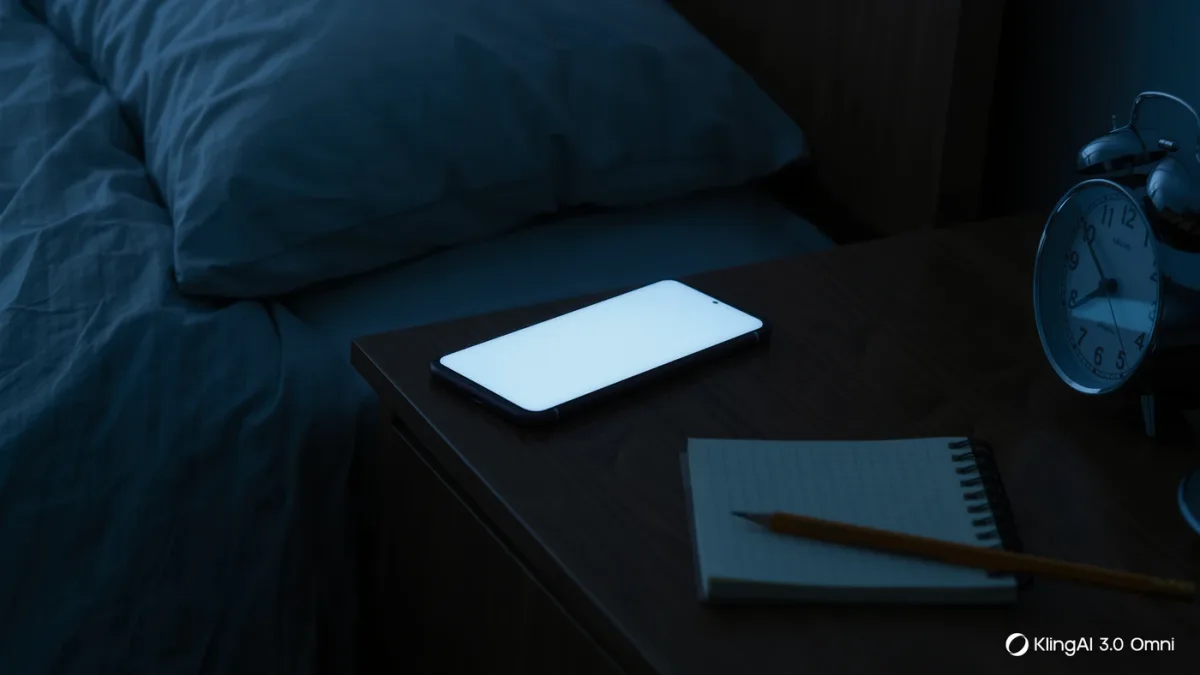
Light in the blue portion of the spectrum shifts the circadian clock more powerfully than warmer light, and several small experimental studies have found that screen use before bed delays melatonin release. The practical effect, however, depends on timing and brightness. A 2017 review in the journal Sleep Medicine Reviews concluded that evening screen use is associated with delayed sleep onset, particularly when devices are used for more than an hour in bed. Dimming screens, enabling warm color modes, and stopping device use 30 to 60 minutes before bed are the adjustments most often recommended by sleep researchers.
What about exercise for better sleep?
Physical activity is one of the better-supported non-drug strategies for sleep. A 2015 randomized trial in the Journal of Sleep Research found that regular moderate aerobic exercise reduced insomnia symptom severity in older adults with chronic sleep complaints. Timing is a common concern, though evidence suggests vigorous exercise ending less than an hour before bed can delay sleep onset in some people, while moderate exercise earlier in the day or evening generally supports sleep.
Do naps help or hurt?
Short naps of 20 to 30 minutes can restore alertness without much grogginess, and NASA-funded research on pilots in the 1990s found that a planned 26-minute nap improved performance measurably. Longer naps, or naps taken late in the afternoon, are the ones most likely to interfere with nighttime sleep by reducing the pressure to sleep that builds across the day. People with insomnia are often advised to skip naps entirely during CBT-I, because staying awake during the day strengthens the sleep drive at night.
Which habits get more credit than they deserve?
A few long-standing recommendations hold up less well under scrutiny.
- Bath and shower timing. Passive body heating in the evening is associated with modestly faster sleep onset in meta-analyses, but the effect is small and depends on timing the bath one to two hours before bed, not immediately before.
- Counting sheep. A frequently cited 2002 study from the University of Oxford found that people instructed to imagine a relaxing scene fell asleep faster than those instructed to count sheep or do nothing, suggesting the classic trick may be less useful than imagery.
- Sleep supplements. Melatonin products vary widely in actual content per dose, per a 2017 analysis in the Journal of Clinical Sleep Medicine, and evidence for melatonin in primary insomnia in adults is mixed. Supplements are not covered as treatment here.
- Forcing an early bedtime. Spending more time in bed than the body needs can worsen insomnia by conditioning wakefulness in bed. Sleep restriction, a core CBT-I component, deliberately tightens time in bed to consolidate sleep.
How long before sleep habits pay off?
Behavioral changes to the circadian rhythm usually take several days to two weeks to stabilize, and trial data on CBT-I commonly show measurable improvement within four to eight weekly sessions. Clinicians suggest treating a new routine as an experiment lasting at least two weeks, changing one variable at a time so the effect of each change can be judged.
When to see a doctor
Sleep trouble that persists longer than three months, occurs at least three nights a week, or interferes with daytime functioning meets the general clinical threshold for chronic insomnia and warrants a conversation with a clinician. Loud snoring with gasping or pauses in breathing can signal sleep apnea, which sleep hygiene will not fix. A 2020 study in The Lancet Respiratory Medicine estimated that more than 900 million adults worldwide have obstructive sleep apnea. Excessive daytime sleepiness despite adequate time in bed, restless legs sensations, or mood changes accompanying insomnia are also reasons to seek evaluation rather than to keep adjusting bedtime routines.