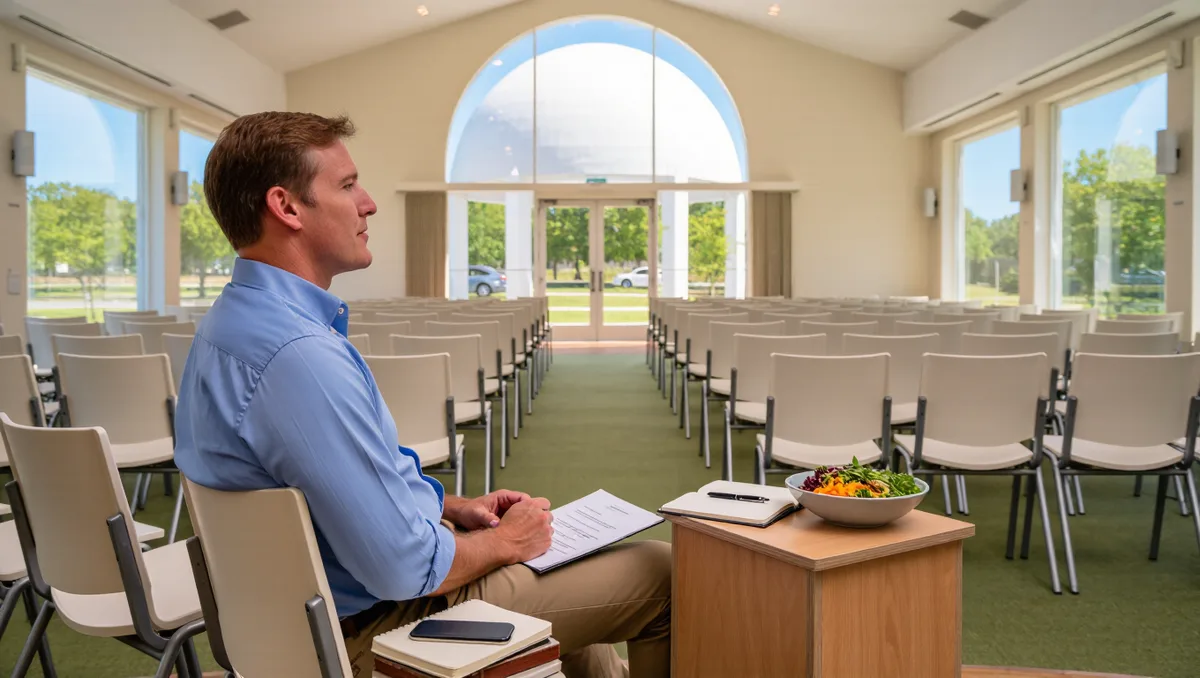
A free three-talk series in suburban Chicago drew nearly 400 people to its opening night, and the topic explains why: how to lose fat on the new weight-loss medications without losing the muscle a person needs to stay independent. According to EIN Presswire, the Harmony in Health: Body, Mind and Spirit series opened on October 17, 2026, at the Science of Spirituality International Meditation Center in Lisle, Illinois.
The inaugural talk, "Plants, Protein and GLP-1s: The Science of Losing Fat While Preserving Muscle," was delivered by Dr. Kunwarjeet Singh Duggal, M.D., a board-certified physician specializing in physical medicine and rehabilitation, per the Science of Spirituality program page. Organizers describe the series as combining medical education, evidence-informed wellness discussion and meditation, with each session including a physician talk, an introduction to meditation and a complimentary plant-based meal.
The turnout is one number worth sitting with. A Saturday-morning talk on protein and muscle preservation filled a meditation center with roughly 400 attendees, which the source describes as reflecting public interest in how medical advances, nutrition and lifestyle choices bear on healthy aging and independence. Readers weighing the nutrition side of that question can start with the publication's nutrition coverage. This connects to our earlier piece, What to Know About Muscle Health in Clinical Nutrition.
What did the talk actually cover?
Dr. Duggal framed muscle as more than an appearance concern. "The goal is not just losing weight. It is losing fat while preserving muscle, your body's metabolic engine," he said, according to the press release. He discussed the role muscle plays in mobility, physical function and metabolic health.
The talk also drew on his experience caring for patients in skilled nursing facilities, where weakness and limited mobility can affect a person's ability to return to daily activities after a hospital stay. The press release presents protein intake, fiber-rich plant foods and regular resistance training as lifestyle considerations for attendees to discuss with their own health care professionals — general education, not individualized medical advice. For background on that first item, see the guide on how much protein adults need. Readers following this should also see How Much Protein Do Adults Need? Daily Amounts, Explained.
Why a chair-stand test showed up at a health talk
Dr. Duggal led the audience in the 30-Second Chair Stand Test, which the source describes as a commonly used assessment of lower-body strength and functional fitness. The exercise underscored the series' central theme: preserving muscle is a question of maintaining the strength needed for everyday activities, not only of fitness or appearance. "Weight management and healthy aging go hand in hand. The goal is not simply to lose weight, but to preserve strength, mobility, and independence for an active, fulfilling life," Dr. Duggal said in the release. Readers interested in the training side of that equation can review the publication's workouts coverage.
What comes next in the series
Two talks remain, both free and open to the public with advance registration requested. On Saturday, November 14, 2026, at 10:30 a.m., Dr. Tim Fior, M.D. presents "Energy Is Everything: Recharge Your Daily Life," which the organizers describe as exploring energy and vitality. On Saturday, December 5, 2026, at 10:30 a.m., Dr. James H. Gruft, M.D. presents "The Use of Peptides for Anti-aging and Pain," described as an examination of the emerging medical use of peptides. Both are held at the Science of Spirituality International Meditation Center, 4105 Naperville Road, Lisle, Illinois.
Science of Spirituality is a global nonprofit headed by Sant Rajinder Singh Ji Maharaj, and its Lisle center serves as the organization's international headquarters, per the organizer's program page. Readers tracking the wider conversation about GLP-1 medications and muscle preservation should note what this event is and is not: a well-attended community education program drawing on research discussed in the presentation, not a new clinical trial. The peptide talk in December may be the one to watch, since the source itself labels that subject as emerging.