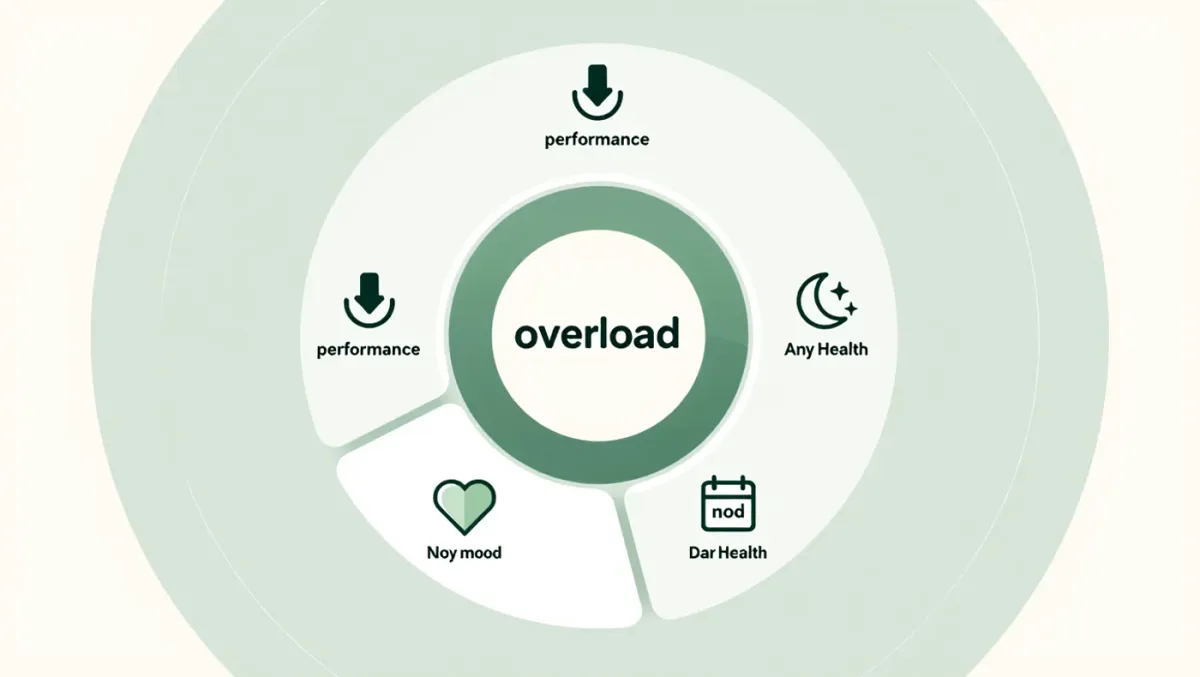
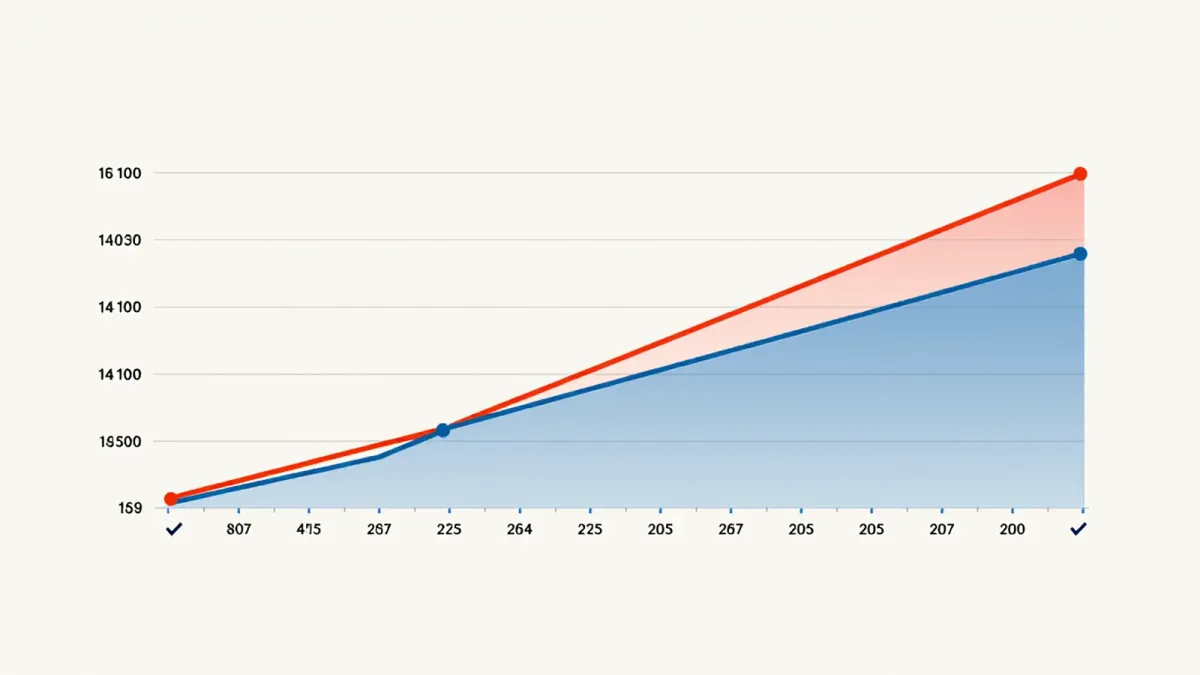
The defining sign of overtraining syndrome is paradoxical: performance keeps falling despite training continuing or increasing, and per a 2013 joint consensus statement from the European College of Sport Science and the American College of Sports Medicine, that decline must persist for weeks or months — beyond normal fatigue and beyond functional overreaching — before the syndrome is diagnosed.
How is overtraining defined?
The consensus framework distinguishes three stages on a continuum. Functional overreaching describes short-term performance dips from deliberately hard training blocks, resolving within days to two weeks of rest — a normal part of periodized training. Nonfunctional overreaching describes a deeper stagnation or decline lasting weeks to months, accompanied by psychological and physiological disturbance. Overtraining syndrome, the furthest point, resembles nonfunctional overreaching but persists longer, lacks another medical explanation, and can take months to resolve. No single biomarker confirms it; diagnosis remains a judgment made after excluding other causes, which is why athletes with these signs deserve clinical evaluation rather than self-diagnosis.
What are the recognized signs?
Research and consensus documents cluster the warning signs into recognizable groups:
- Performance: unexplained decline or plateau in training and competition, worse performance at usual intensities, and increased perceived effort for unchanged workloads.
- Physiology: elevated resting heart rate on waking, disturbed sleep despite fatigue, recurrent minor illness suggesting suppressed immunity, and in women, menstrual disturbance; some studies also associate overtraining with reduced morning saliva cortisol responses, though hormonal markers vary too much between individuals to serve as standalone tests.
- Psychology: mood disturbance measured by questionnaire rises reliably in overtrained athletes — irritability, low motivation, anxiety, and loss of enjoyment in training are among the most consistent findings in the literature.
- Musculoskeletal: persistent soreness beyond the usual 48-hour window, frequent niggling injuries, and heavy, leaden legs on easy sessions.
Consensus psychology research found that mood disturbance detected by the Profile of Mood States questionnaire was among the most reproducible markers distinguishing overtrained athletes from merely tired ones, an observation worth its weight in practice: athletes who suddenly dread sessions they normally enjoy are showing a documented warning sign, not a character flaw.
Which early markers are most practical?
Monitoring research favors markers that need no laboratory. Morning resting heart rate, taken before rising, rises measurably in many athletes during nonfunctional overreaching, and wearable-derived overnight heart rate variability has become a common supplement; reviews suggest HRV trends, measured consistently over weeks, outperform single readings, and reductions are associated with accumulated stress from training and life. Training logs provide the other half: a performance test repeated under matched conditions — same route, same effort — isolates the decline that subjective fatigue obscures. One strong week of fatigue proves nothing; two to three weeks of worsening performance, disturbed sleep, and rising resting pulse form the pattern that warrants action.
How much recovery does overtraining require?
More than most athletes expect, which is part of why prevention matters. Consensus guidance suggests functional overreaching resolves within days to two weeks; nonfunctional overreaching commonly requires weeks to months; full overtraining syndrome has been reported to take months. The core prescription is unglamorous: rest or drastic training reduction, followed by a gradual return in which easy aerobic work resumes first and intensity returns last. Studies of recovery report no reliable pharmacological shortcut; sleep, adequate energy intake, and correction of any nutrient deficiency are the evidence-supported inputs. Psychological stress compounds the problem — research on training stress consistently finds that life stress outside sport deepens the same signs, and recovery plans that ignore non-training stress recover slower.
How is it prevented?
Prevention research converges on load management rather than heroics. Hard training blocks followed by planned recovery weeks, at least one full rest day weekly for most athletes, sleep duration that matches training load, and sufficient energy intake — studies of low energy availability describe a syndrome with overlapping signs that deserves separate attention. Periodization exists precisely because the alternative, unbroken hard training, is how the continuum from overreaching to syndrome begins.
When to see a doctor
A sports physician or clinician should evaluate any athlete with weeks of declining performance plus systemic signs — disturbed sleep, persistent elevated resting heart rate, recurrent illness, mood change, or menstrual disruption — both to exclude mimicking conditions and to guide recovery. Urgent assessment is warranted for chest pain or fainting during exercise, unexplained breathlessness, or a racing irregular heartbeat at rest. Athletes who restrict food intake, lose weight unintentionally, or develop an altered relationship with food around training deserve prompt clinical attention, since disordered eating shares territory with overtraining and carries its own medical risks.