For most people lifting hard, a muscle group needs about 48 hours between sessions before it is fully ready to be loaded again: research on training frequency generally supports two to three sessions per muscle group per week, and the American College of Sports Medicine has long advised resting the trained muscle group for at least two days between demanding strength workouts.
What actually happens during recovery?
Strength training does not build muscle during the session; it creates the stimulus. In the hours and days afterward, the muscle repairs exercise-induced micro-damage, replenishes glycogen, and — when nutrition and sleep allow — adds contractile protein. Research on muscle protein synthesis shows the process rises sharply after resistance exercise, peaks in the first 24 hours or so, and returns toward baseline by roughly 36 to 48 hours in untrained adults, with trained individuals showing a shorter, blunter response.
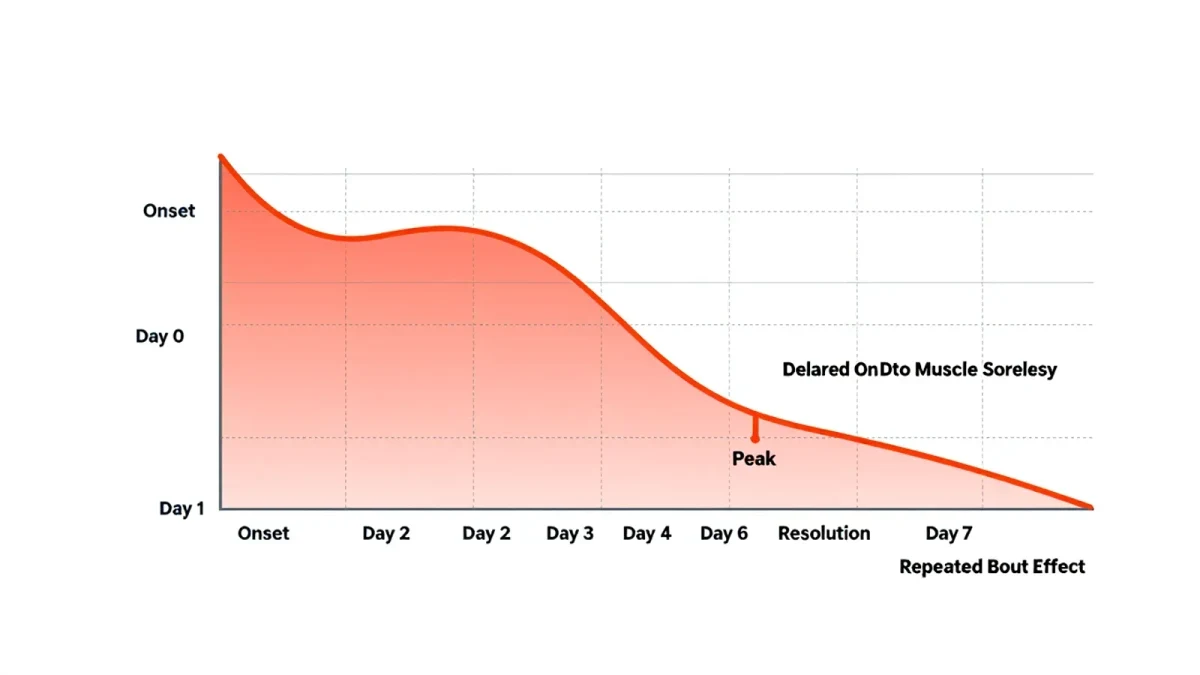
This timeline explains why the 48-hour rule exists and also why it is approximate. Recovery speed varies with training experience, session volume, sleep, protein intake, age, and the type of stress applied. Soreness — delayed-onset muscle soreness, which peaks a day or two after unfamiliar work — tracks imperfectly with recovery; research has repeatedly found that a muscle can perform well while still sore and can be under-recovered without significant soreness at all.
How many rest days does the evidence suggest?
The answer depends on how sessions are counted:
- Per muscle group: roughly 48 hours between hard sessions is the common evidence-based spacing, which fits comfortably with training each muscle two to three times weekly.
- Full-body lifters: one rest day between whole-body sessions, or three sessions spaced across a week, matches trial designs that produced strength gains.
- Split routines: training different muscle groups on consecutive days is standard practice precisely because recovery is local — a person whose legs are recovering can still train pressing movements.
- Complete rest days: most evidence-based programs include at least one to two full rest or active-recovery days per week, though no trial has established a universal minimum number for general health.
Federal guidelines, per the CDC's summary of the Physical Activity Guidelines, ask adults for muscle-strengthening activity at least twice weekly but place no upper limit, instead noting that higher frequencies are acceptable when the same muscle group is not overloaded on consecutive days.
Is training a muscle twice a week better than once?
Probably, modestly. A 2016 meta-analysis by Schoenfeld and colleagues found training each muscle group twice weekly produced greater hypertrophy than once weekly when total volume was equated, and a 2019 follow-up analysis suggested three sessions may add a small further benefit. The interpretation most researchers offer is that spreading the same total work across more sessions allows higher quality per session and more frequent protein-synthesis stimulus, rather than frequency itself being magic. Once-a-week training still builds muscle; the differences in trials were moderate, not dramatic.
What speeds or slows recovery?
The levers with reasonable evidence behind them are unglamorous:
- Sleep: short or fragmented sleep is associated with reduced recovery of strength and with impaired performance; studies of sleep restriction report measurable declines in muscle function.
- Protein: total daily intake, spread across the day, supports the repair processes described above; evidence on precise timing is weaker than evidence on totals.
- Volume management: recovery demands scale with hard sets performed; a three-set session recovers faster than a ten-set session, which is why advanced programs rarely train one muscle hard three times weekly.
- Age: research suggests muscle protein synthesis responses to training are slower and require somewhat more stimulus in older adults, lengthening practical recovery windows.
- Active recovery: light movement, walking, or easy cycling can reduce soreness perception; evidence that it accelerates actual tissue repair is limited.
Popular interventions — ice baths, compression, massage — show mixed or modest effects in reviews. Massage appears to reduce soreness perception; cold water immersion may blunt muscle growth signaling when used immediately after lifting, per some trials, though the research remains contested.
Can recovery days include activity?
Yes, and most programs assume it. A rest day for a trained muscle does not require a motionless day. Walking, easy cycling, mobility work, or training a different muscle group all fit the local-recovery model. The distinction that matters is intensity on the recovering muscle itself: research on repeatedbout training suggests a light, short session on a recovering muscle does not substantially impair adaptation, while another maximal session does. Runners and lifters share this pattern — easy days and hard days alternate because stress is cumulative even when it is not severe.
Signs more rest is needed
Practical indicators from the monitoring research include performance dropping across successive sessions, persistent soreness beyond about 72 hours, disturbed sleep, elevated resting heart rate that stays high for days, and irritability or loss of motivation around training. A single such sign is unremarkable; several together suggest the current load exceeds recovery capacity, which calls for lighter sessions or additional rest rather than pushing through. The distinction matters because chronic under-recovery sits on the milder end of a spectrum that, unchecked, can progress toward the performance decline and mood disturbance associated with overtraining.
When to see a doctor
Medical assessment is warranted for sharp or localized pain during training that persists after the session, swelling or bruising around a joint, weakness after a pop or strain, or muscle pain accompanied by dark urine — the latter a warning sign of rhabdomyolysis, a rare but serious breakdown of muscle tissue requiring urgent care. Persistent fatigue, unexplained weight change, or sleep disruption despite adequate rest days also deserves clinical evaluation, since several medical conditions mimic the everyday signs of under-recovery.