Blood pressure readings pack a lot of meaning into two numbers. The categories behind those numbers show what the figures mean. They also show when doctors start to pay closer attention.
This guide explains the standard categories. It also covers why the same person can read differently in different settings. It is educational only. It does not replace a talk with your own clinician.
What the Numbers Measure
Blood pressure is the force of blood pushing against the walls of blood vessels. A reading pairs two values. The systolic number is the peak of a heartbeat. The diastolic number is the pressure between beats. Values are measured in millimeters of mercury. The cuff usually goes on the upper arm, at the brachial artery. A reading is written as the systolic value over the diastolic value. This connects to our earlier piece, Home Blood Pressure Monitoring: How to Do It and Read the Numbers.
Blood pressure counts as one of the vital signs. Heart rate, breathing rate, body temperature, and oxygen saturation are the others. Health teams use all of them to evaluate a patient.
The Categories at a Glance
- Normal: an adult resting reading under 120 over 80, per the American Heart Association and American College of Cardiology.
- Stage one hypertension: a systolic value of 130 to 139 with a diastolic value of 80 to 89, per the 2017 American Heart Association guidelines.
- Isolated systolic hypertension: per published guidance, systolic pressure above 140 with diastolic below 90 may present a health concern.
- Hypertensive emergency: readings above 180 over 120 can, per clinical guidance, be an acute problem that needs urgent care.
- Low reading: per the usual clinical line, values under 90 over 60 are often called hypotensive, and they matter most when symptoms appear.
Guidelines differ slightly by region. Per European guidance, the normal bar sits under 120 over 70. Categories are conventions, not laws of nature. The gap between categories can feel wide. That is why a single number should never be read alone. For related coverage, see The Shingles Vaccine: What Adults Over 50 Should Know.
Why Context Changes the Reading
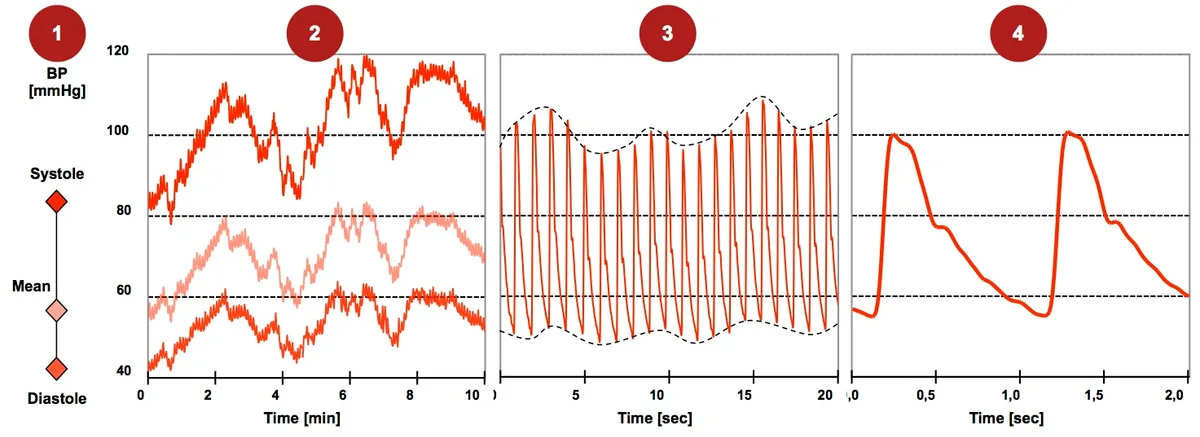
A reading is not a fixed snapshot. Guidelines use different thresholds for clinic readings, home readings, and devices that track a full day.
Pressure also moves with daily life. It responds to stress, food, heat, posture, and activity. It follows a rhythm too. Readings run highest in the early morning and evening. They run lowest at night. That is why home logs and day long devices can say more than a single office visit.
Because single readings wobble, some experts prefer ambulatory measurement when diagnosing high blood pressure. Per the same published guidance, a lasting gap of more than 10 between the two arms can also warrant a closer look.
Why the Thresholds Matter
The categories track real risk. Per observational research, cardiovascular risk climbs steadily as systolic pressure rises.
Lasting high pressure is a risk factor for stroke, heart attack, heart failure, and arterial aneurysms. It is also the leading cause of chronic kidney failure. This is why the categories are tied to health outcomes, not to how a person feels.
The numbers vary across whole populations too. Per global estimates, average readings sit near 127 over 79 for men and 122 over 77 for women. Those averages have held steady since 1975.
Conclusion: Numbers Plus Context
Categories are a map, not a verdict. A stressful commute, a cold exam room, and the time of day can all move a reading from one box to another.
If a recent reading landed outside the normal range, bring the numbers to your clinician. Ask what they mean for your history and your risk. That talk, not a single cuff reading, is where decisions about action get made.
For personal guidance on blood pressure, talk with a qualified health professional.