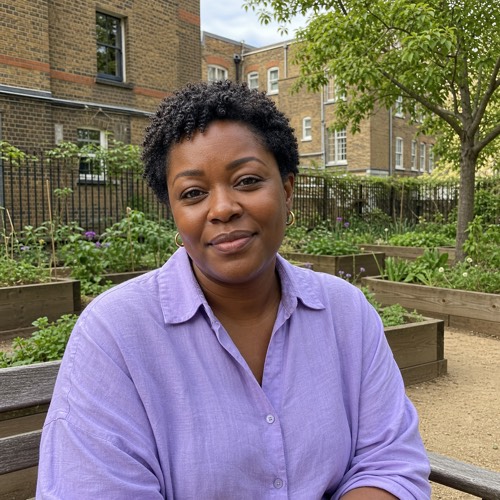

Reading serious books can work the way food does, according to Dr. Shilo Brooks, who described books as "soul nutrition" in a lunchtime conversation at Yeshiva University on October 22, 2026. His claim, made at the Zahava and Moshael J. Straus Center for Torah and Western Thought with the S. Daniel Abraham Honors Program, is that enduring books do more than entertain. They supply perspective and guidance that a person may not find anywhere else. The idea matters for wellness readers because it treats the mind's diet as seriously as the body's, a framing familiar to anyone who follows nutrition coverage but rarely applied to reading.
Brooks speaks from experience rather than theory alone. Raised in Lubbock, Texas, in an unstable household, he was not initially a strong student and did not plan to attend college, according to the Yeshiva University account of the event. Without mentors to confide in, he reasoned that books which had endured for thousands of years might hold the guidance he lacked. He went on to graduate from the Great Books program at St. John's College, earn a PhD in political science from Boston College, and teach at Bowdoin College, the University of Virginia, and Princeton University. He is now President and CEO of the George W. Bush Presidential Center and a Professor of Practice at Southern Methodist University.
Why does he call books "soul nutrition"?
The phrase is the event's framing, and the conversation behind it explains the metaphor. Brooks hosts the Free Press podcast Old School, on which guests discuss not their favorite books but the ones that left them different after reading. That distinction is the core of his argument: a book worth its place on a shelf changes the person who reads it. He joked that Plato's Republic and Shakespeare are "self-help books," meaning they address real human problems rather than serving as objects of academic study alone. Readers following this should also see Core Exercises for Lower Back Pain: What Clinical Trials Support.
The wellness parallel is worth spelling out. Health coverage usually treats nourishment as a physical matter, and wellness advice often stops at the body. Brooks's account suggests a second kind of intake: a person facing a hard stretch of life can turn to works that have carried other people through similar ones. His own turning point came at 18, when F. Scott Fitzgerald's This Side of Paradise showed him that other young people shared his questions and offered a like-minded community to aspire toward.
What did Brooks say about how books actually change a reader?
His answer, drawn from the event's question-and-answer session, runs on three mechanisms.
- Guidance where mentors are missing. As a teenager in Lubbock, he treated long-enduring books as a substitute for the advice he had no one to give him. The books became, in effect, a set of advisors.
- Living someone else's life. Books, he said, are an "occasion to live the life of someone else," whether that is Elizabeth Bennet, Achilles, or Frederick Douglass, whose Narrative he counts among his favorites. The point is practice in other perspectives, not escape.
- Productive discomfort. He teaches Machiavelli's The Prince because it makes students "uncomfortable" by challenging them to defend morality against Machiavelli's case for cunning. Difficulty, in his account, is part of the nourishment.
He also pushed back on a common objection. Asked how modern readers should approach ancient epics like The Iliad, whose characters can seem to lack interior lives, he argued that Achilles's rage is one anyone who has felt wronged can recognize. The true diversity a curriculum can offer, he said, lies not only in race and gender but in time. A warrior on an ancient battlefield may be more foreign to a modern reader than a contemporary author, yet both can speak to enduring human experiences.
What does his path suggest about the stakes?
The biographical detail is the strongest part of the case, and it is worth reading closely. A physician from Brooks's community offered to cover his St. John's tuition on the condition that he use his education to benefit others. At Princeton, a course that began with about 30 students grew to roughly 300 within a year, which he credited to treating the great books as living works. The trajectory, from working at a Texas shopping mall to leading a presidential center, is one person's story and proves nothing in general. But it illustrates the mechanism he describes: a reading habit, taken seriously, opened doors that his circumstances had closed.
His religious journey adds a further layer. He described initial hostility to religion, rooted in a negative association with his father, followed by an encounter at St. John's with the depth of the Bible read alongside the Greek philosophic tradition. Reading Leo Strauss on Athens and Jerusalem and Maimonides's Guide to the Perplexed, which he called the hardest book he has ever read, deepened his interest. His doctoral work on Nietzsche, whom he called the West's most profound critic of religion, nudged him toward appreciating the possible truth of revelation. He and his family are now part of a religious community, and he described the journey as ongoing.
What remains uncertain, and what should a reader take from it?
The honest limits are clear. This was a single speaker's account of his own life, reported by the hosting university, not a research finding about reading and well-being. Nothing in the event established that reading specific books produces specific outcomes for the general public. Readers drawn to the "soul nutrition" framing should treat it as one scholar's testimony about what sustained reading did for him: it gave him guidance, community, and a career he had not planned.
The practical takeaway is modest and concrete. Brooks returns most often to Nietzsche's Beyond Good and Evil, Xenophon's The Education of Cyrus, Machiavelli's The Prince, and Larry McMurtry's Lonesome Dove, and he teaches The Education of Cyrus for its lessons on ambition and youth. His example suggests that the useful question is not which books are greatest in the abstract, but which ones leave a person different after reading. For readers building habits that support long-term health, alongside movement, sleep, and diet, sustained reading of demanding books is one more input worth considering, on the evidence of one life that it changed. This connects to our earlier piece, Strength Training After 50: What the Science Actually Says.